

 Español
 عربى
A1
Automotive Sheet Metal Components
Used in selected body panels, brackets, seat structures and metal subassemblies where a permanent threaded mounting point is specified.

Discover our comprehensive range of high-precision fasteners, stampings, and machined components. Manufactured under strict IATF 16949 quality standards.
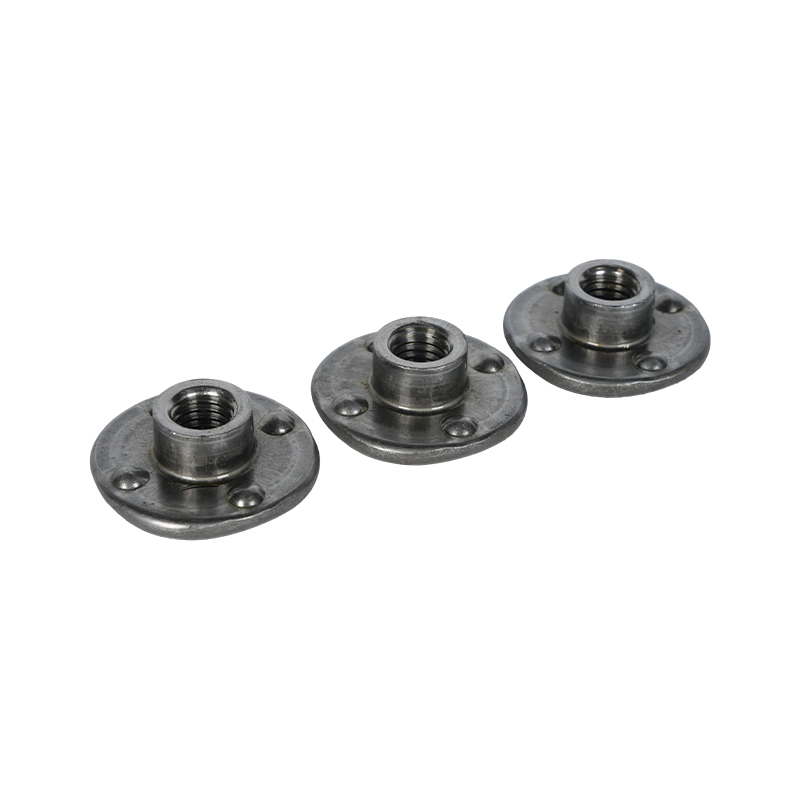
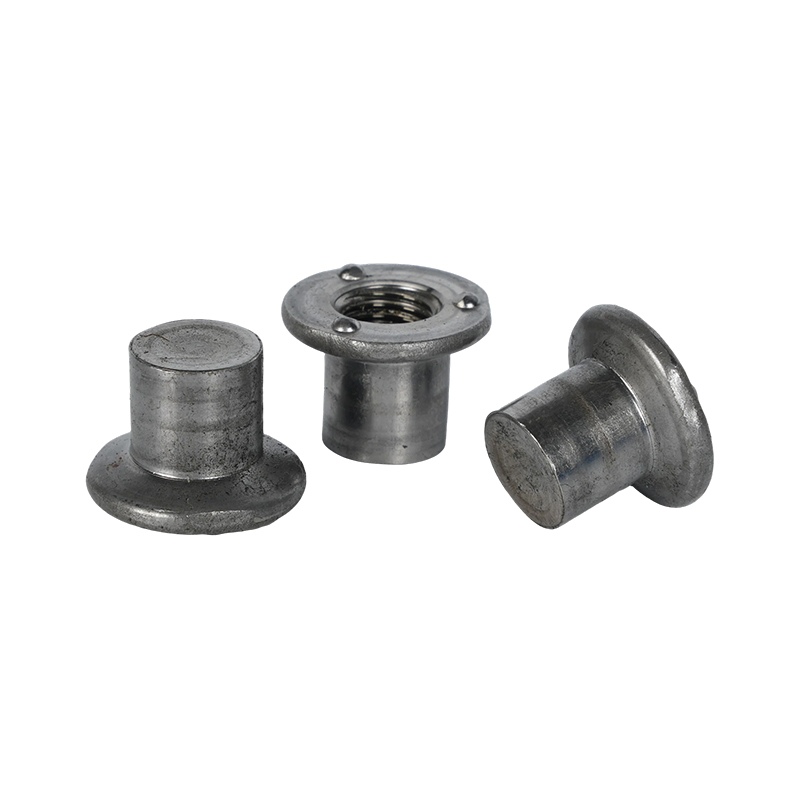
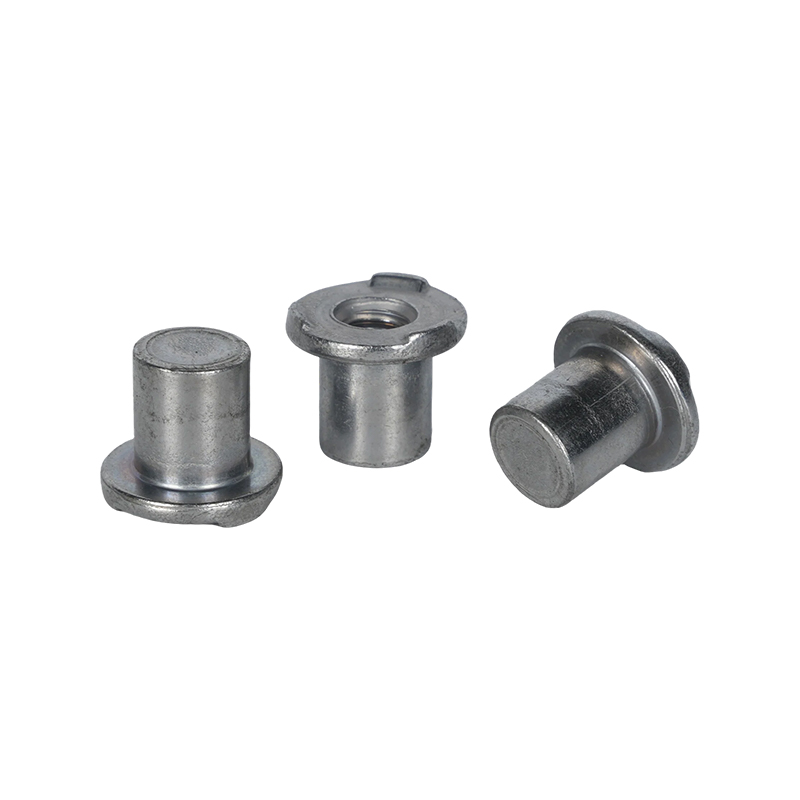
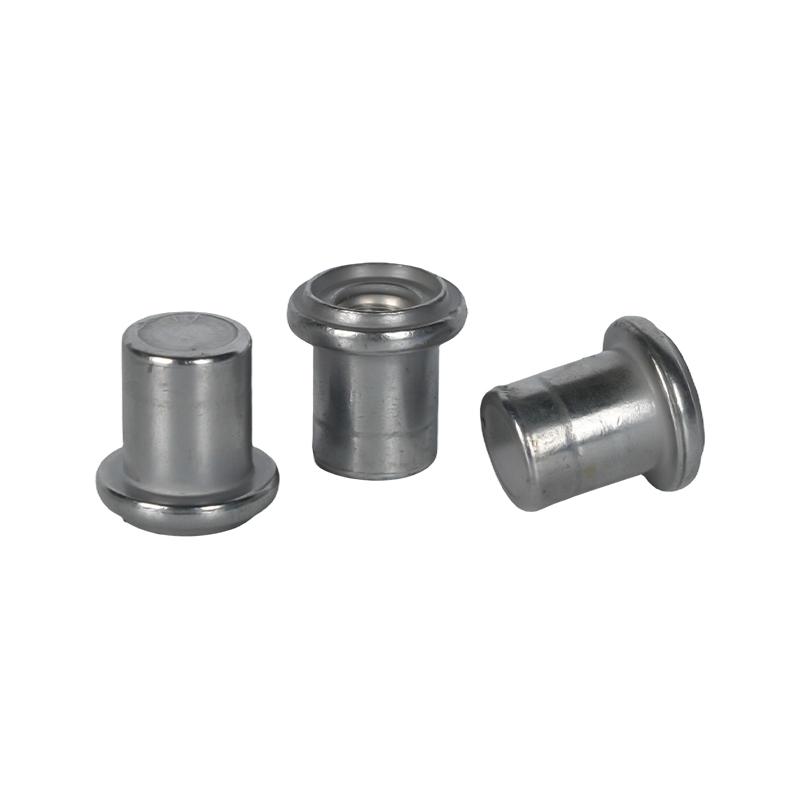
Spot Weld T Nuts are internally threaded fasteners designed to be attached to metal components through resistance spot welding. Their T-shaped configuration provides a defined mounting structure, while the threaded center creates a fastening point for bolts or other compatible threaded components.
These nuts are used in fabricated metal assemblies where a permanent threaded connection is required on a sheet, panel, bracket or structural component. During installation, the designated welding areas are positioned against the workpiece and joined using a suitable spot welding process. Nut geometry, material compatibility, welding parameters and component thickness all influence the final connection.
The nut body, threaded opening and welding base form the main functional areas. Their dimensions and configuration should be selected according to the mating component and welding process.
The central body contains the internal thread used to receive a matching bolt or screw. Thread diameter, pitch, depth and tolerance determine compatibility with the intended fastening component.
The base provides the contact area for attachment to the workpiece. Its shape and contact geometry need to correspond with the specified welding arrangement and the available mounting surface.
Designated contact points or surfaces allow the nut to be joined to a metal component through resistance welding. Their position and dimensions affect electrode access and weld formation.
The external profile helps locate the nut during assembly. The mounting arrangement should control alignment so that the finished thread remains accessible for subsequent fastening operations.
Resistance spot welding uses electrical current and electrode pressure to create a localized welded connection between compatible metal surfaces. The actual welding schedule depends on the nut design, workpiece material and production setup.
Place the nut against the designated mounting area of the metal workpiece, ensuring correct orientation and alignment.
Apply electrode pressure to hold the components in the required position before the welding current is introduced.
Electrical current generates localized heat at the contact interface, forming the weld under controlled pressure.
Inspect the attachment and verify the thread condition, positioning and weld quality against the approved requirements.
Welding current, electrode force, weld time and electrode configuration should be established through process validation. Incorrect settings may cause insufficient bonding, excessive heat input, surface damage or thread distortion.
Spot welding creates a fixed connection between the nut and the metal workpiece, providing a threaded mounting point without requiring access to the rear side for a separate nut during later assembly.
A defined external shape and mounting arrangement can support consistent nut placement in production fixtures and automated or semi-automated assembly processes.
The internal thread is incorporated into the attached component, reducing the need to handle a loose nut during subsequent bolting operations.
Thread dimensions, body height, base geometry and material can be specified according to the workpiece structure and fastening requirements, subject to production feasibility.
These fasteners are suited to fabricated metal products that require a fixed threaded point for component installation, equipment assembly or panel fastening.
Used in selected body panels, brackets, seat structures and metal subassemblies where a permanent threaded mounting point is specified.
Can be incorporated into enclosure panels, equipment cabinets and mounting plates to provide threaded attachment locations for internal components.
Applied in selected machine frames, sheet-metal covers, support brackets and fabricated mechanical structures.
Used in metal furniture frames, fabricated housings and other assemblies requiring fixed threaded connections.
Selection should consider both the mechanical fastening requirements and the welding conditions of the target component.
A compatible nut must fit the bolt, workpiece thickness, welding equipment and available installation space. Drawings and application details help establish the correct configuration.
| Specification | Details to Confirm |
|---|---|
| Thread Size | Nominal diameter, pitch and thread tolerance |
| Thread Standard | Metric or applicable inch-based thread system |
| Nut Dimensions | Body height, width, base length and overall profile |
| Welding Geometry | Contact points, base configuration and electrode access |
| Material | Material grade and compatibility with the workpiece |
| Surface Condition | Coating, plating or untreated surface requirements |
| Workpiece | Base metal, thickness and mounting position |
| Performance Criteria | Weld strength, torque requirements and inspection method |
Product consistency depends on controlled forming, thread processing and dimensional verification. For welded applications, the finished nut should also be evaluated as part of the complete nut-to-workpiece assembly.
Verify material identification and applicable mechanical or chemical requirements according to the order specification.
Check thread diameter, pitch, profile and fit using appropriate inspection gauges or measurement methods.
Inspect body dimensions, base geometry, flatness and other critical features against approved drawings.
Evaluate the welded connection through suitable tests, such as torque, push-off or other application-defined methods.
Check for forming defects, burrs, coating issues and other visible conditions that may affect assembly or use.
Maintain inspection records and agreed sampling requirements to support repeat orders and production traceability.
For an accurate quotation and technical evaluation, buyers should provide the required thread specification, nut drawing and details of the metal component to which the nut will be welded.
Technical details buyers commonly review when sourcing spot weld T nuts.
They are used to create permanent threaded mounting points on metal components. Typical applications include selected automotive parts, sheet-metal enclosures, machinery structures and fabricated assemblies.
They are positioned against a compatible metal workpiece and attached using a resistance spot welding process. Electrode configuration, current, pressure and welding time need to be matched to the nut and workpiece materials.
They may be used on sheet-metal components when the nut design, material combination and welding process are suitable for the specified sheet thickness. Weld testing is recommended to confirm the connection meets the application requirements.
A standard nut is generally installed as a separate component on a bolt or threaded stud. A spot weld nut is designed to be permanently attached to a metal workpiece, creating an integrated threaded fastening point for later assembly.
Non-standard dimensions may be considered according to drawing requirements and production feasibility. Buyers should provide thread details, dimensional drawings, material specifications and intended welding conditions for review.
Inspection methods depend on the application and acceptance criteria. Common evaluation methods include visual inspection, dimensional checks, torque testing, push-off testing and other specified weld-performance tests.
An RFQ should include thread size, material, nut dimensions, surface finish, workpiece material and thickness, welding requirements, order quantity and delivery expectations. A technical drawing or reference sample is useful for confirming the design.
Zhejiang Xinye Automobile Technology Co., Ltd. traces its business origins to 1995 and specializes in the research, development, and manufacturing of automotive fasteners and metal stamping components. We are China Spot Weld T Nuts Manufacturers and Custom Spot Weld T Nuts Suppliers & Factory.
Our engineering focus covers fastening reliability, dimensional accuracy, mechanical performance, corrosion protection, and application-specific component development.

Deep application knowledge, in-house manufacturing, and certified quality management, applied to the most demanding automotive requirements.
Our business traces its origins to 1995, with more than 30 years of experience in automotive fasteners and stamping parts. This long-term focus builds application knowledge in flange nuts, weld nuts, specialty fasteners, and related metal components.
Standard and non-standard nuts, weld nuts, self-locking nuts, knurled nuts, clinch nuts, sliding nuts, bolts and screws, metal stampings, CNC-machined sleeves and pins, and specialty automotive components.
Production is completed in-house from raw materials to finished goods, using automatic cold heading machines, tapping machines, heat-treatment lines, thread-rolling equipment, and hardness testing.
More than 30 years of R&D experience in strength grades, tolerance accuracy, corrosion resistance, temperature performance, and MAT self-correcting thread technology.
We develop Class 12 nuts and carry out pre-research on Class 13 to 14 ultra-high-strength nuts for higher axial-load requirements, such as heavy-duty trucks and high-performance engines.
Tolerance control ranges from 0.06 to 0.30 mm for different applications, with a strong emphasis on thread-fit precision. Final tolerances are defined by product drawings and inspection reports.
Trivalent zinc plating with a stated 480-hour salt-spray result, and Zn-Ni alloy plating with stated results of 480 to 720 hours. Temperature-resistance options of 300, 550, and 650 to 700 degrees Celsius for selected applications.
The MAT thread nut features a self-correcting function on the first few threads, guiding a slightly misaligned bolt into the correct thread path during automated assembly.
Certified to IATF 16949:2016. The quality system covers raw material intake, process inspection, and finished-product testing, including tensile, CMM dimensional, pull-off, fusion-depth, destructive weld, and salt-spray tests.
Drawing and sample review, material and process recommendations, sample trials, dimensional and performance validation, cost optimization, order tracking, batch traceability, logistics coordination, and after-sales technical support.
In-house production and testing capabilities that support process consistency and product conformity.
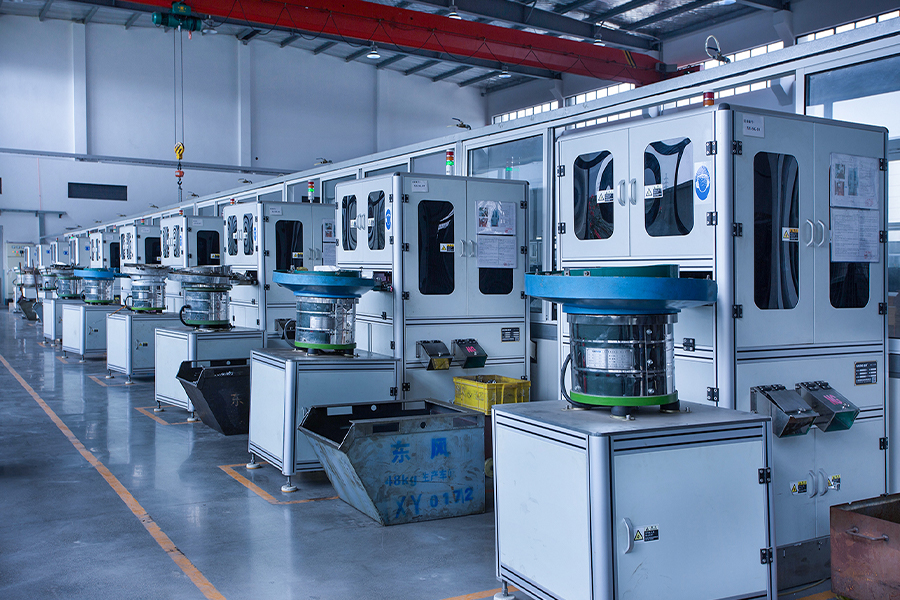 Production
Automatic cold heading machines, tapping machines, heat-treatment lines, thread-rolling equipment, and hardness testing support production from raw materials to finished goods.
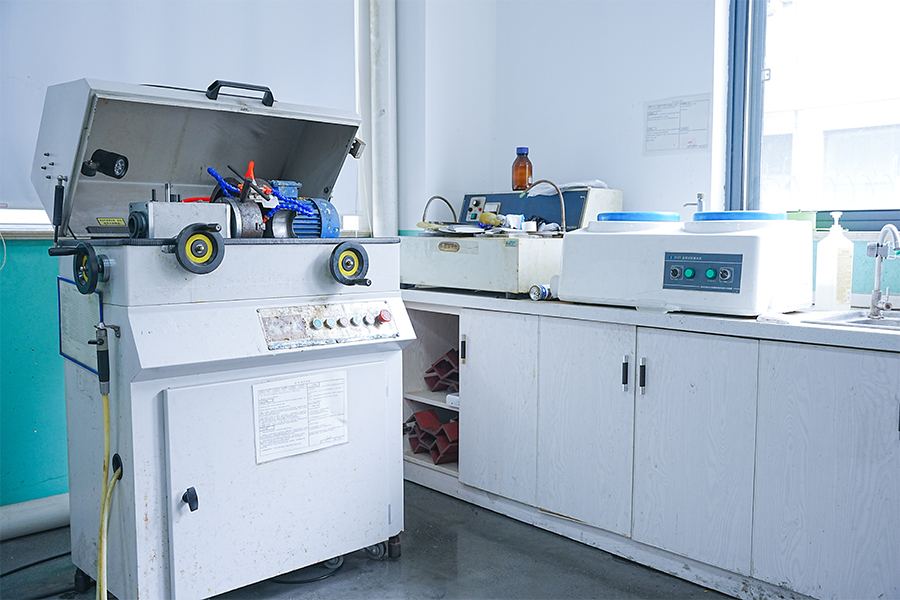 Inspection
 capabilities include tensile, CMM dimensional, pull-off, fusion-depth, destructive weld, and salt-spray tests across raw material intake, process inspection, and finished-product testing.
Technical highlights that matter when specifying automotive fastening components.
These figures are company-reported. Actual tolerances and performance results should be confirmed against product drawings and inspection reports.
| Metric | Company Information |
|---|---|
| Business origin | 1995 |
| Industry experience | More than 30 years |
| Product varieties | More than 500 |
| Quality certification | IATF 16949:2016 |
| Reported tolerance range | 0.06 to 0.30 mm, depending on application |
| Trivalent zinc plating | 480-hour salt-spray result stated |
| Zn-Ni alloy plating | 480 to 720-hour salt-spray result stated |
| Temperature resistance options | 300, 550, and 650 to 700 degrees Celsius for selected applications |
| High-strength nut development | Class 12 development; Class 13 to 14 pre-research |
Automotive fastening and functional components, supported by a broader manufacturing range of nuts, bolts, screws, metal stampings, CNC-machined sleeves, pins, and shafts.
Product suitability is assessed against customer drawings, material grade, strength class, thread specification, tolerance, surface treatment, temperature exposure, corrosion requirements, and assembly method.
Trusted by B2B buyers who need dependable fastening and metal components built to drawing.


