

 Español
 عربى
product
product
product
product
product
product
product
product
product
product
product
product
product
product
product
product

Product Category
Contact us
Message Feedback
About Us
30 Years of Expertise in Automotive Fasteners
Zhejiangxinye Automobile Technology Co. , Ltd. traces its origins to 1995, evolving from Jiaxing Zhapu Xinye Standard Parts Co., Ltd. We are China Sliding Nuts Suppliers and Custom
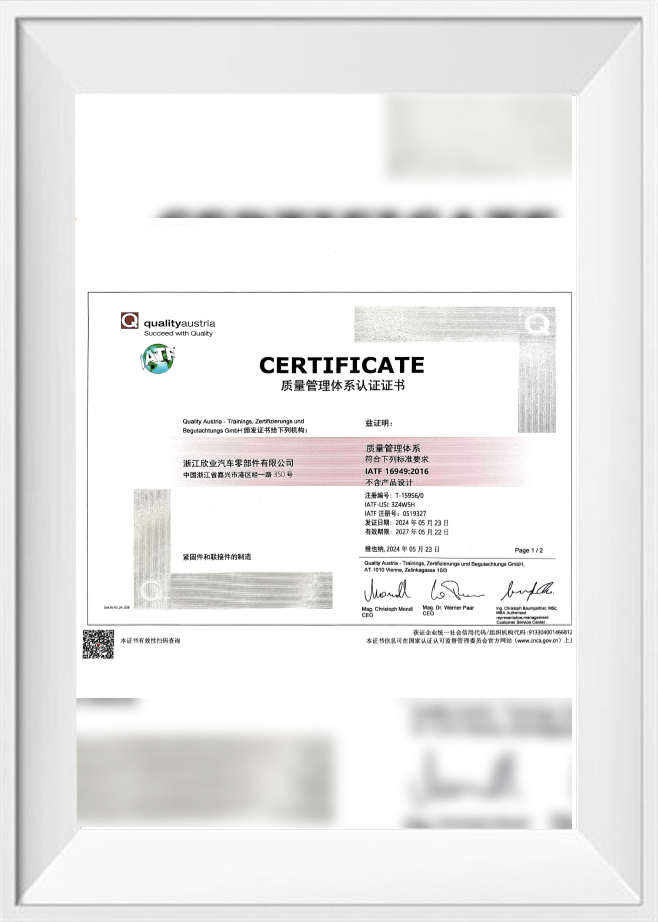
Sliding Nuts factory. The company specializes in the production of various automotive fasteners and stamping parts, including flange nuts, welding nuts, and more. For over 30 years, Xinye has kept pace with industry trends, focusing on technological innovation and internal management, and has achieved steady growth. The company is now certified to IATF 16949-2016.
Adhering to the principle of "surviving by product quality, developing by technological innovation," Xinye takes quality as its foundation and customer satisfaction as a top priority, committed to providing suitable and reliable products. To enhance product competitiveness and strengthen employee quality awareness, the company has established a sound management system and standardized process flows. Work instructions have been developed for special and critical processes, and strict quality inspections are conducted at every step. From raw material analysis to finished product mechanical performance testing, process control is implemented to ensure product conformity. The continuously improving quality management system and stable product performance have earned the company market recognition, as well as customer trust and praise.
Adhering to the principle of "surviving by product quality, developing by technological innovation," Xinye takes quality as its foundation and customer satisfaction as a top priority, committed to providing suitable and reliable products. To enhance product competitiveness and strengthen employee quality awareness, the company has established a sound management system and standardized process flows. Work instructions have been developed for special and critical processes, and strict quality inspections are conducted at every step. From raw material analysis to finished product mechanical performance testing, process control is implemented to ensure product conformity. The continuously improving quality management system and stable product performance have earned the company market recognition, as well as customer trust and praise.
-
0m2
Factory Area
-
0
Brand Origin
-
0+
Product Range


Zhejiangxinye Automobile Technology Co. , Ltd.
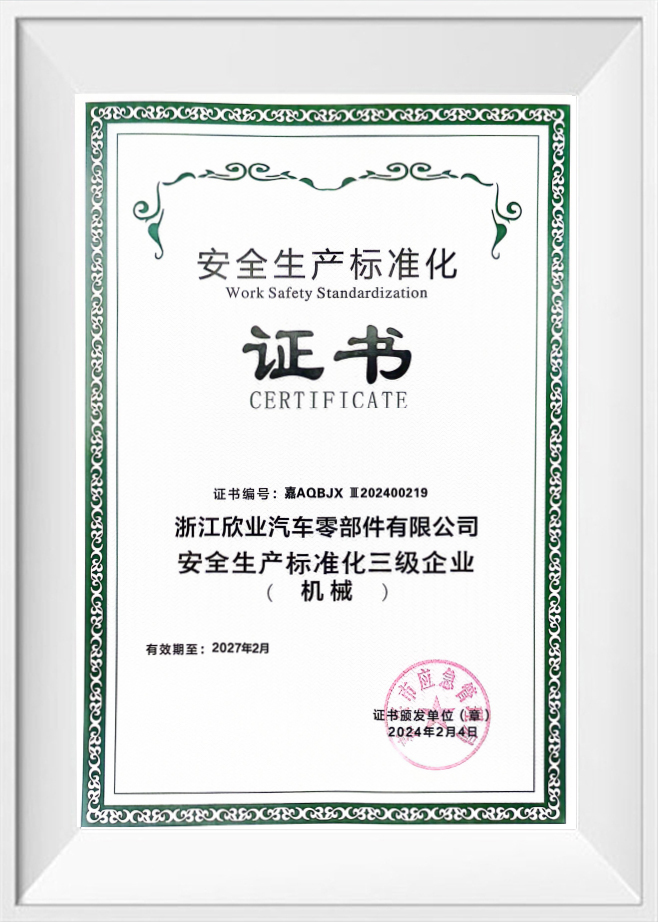
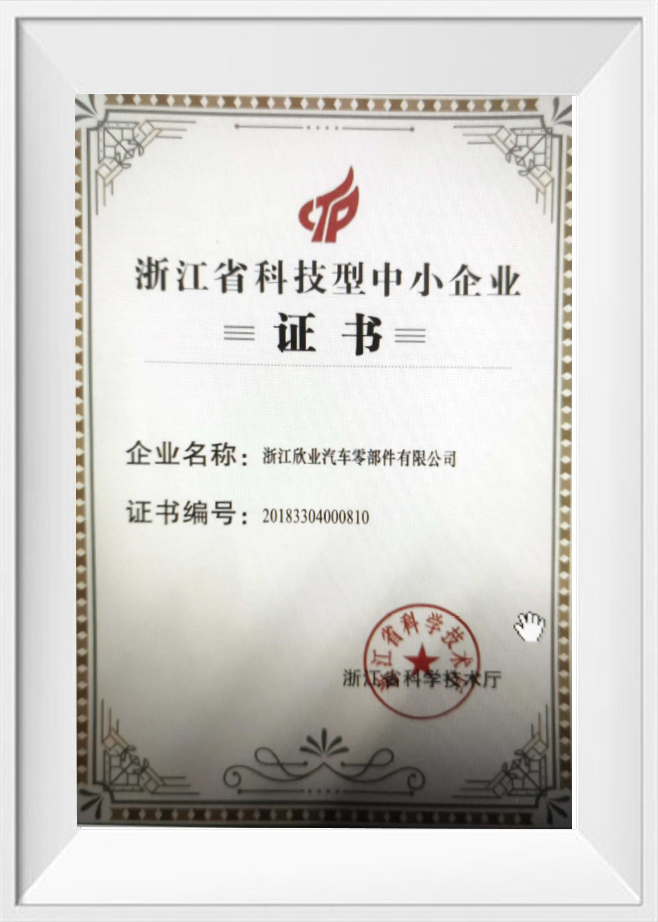
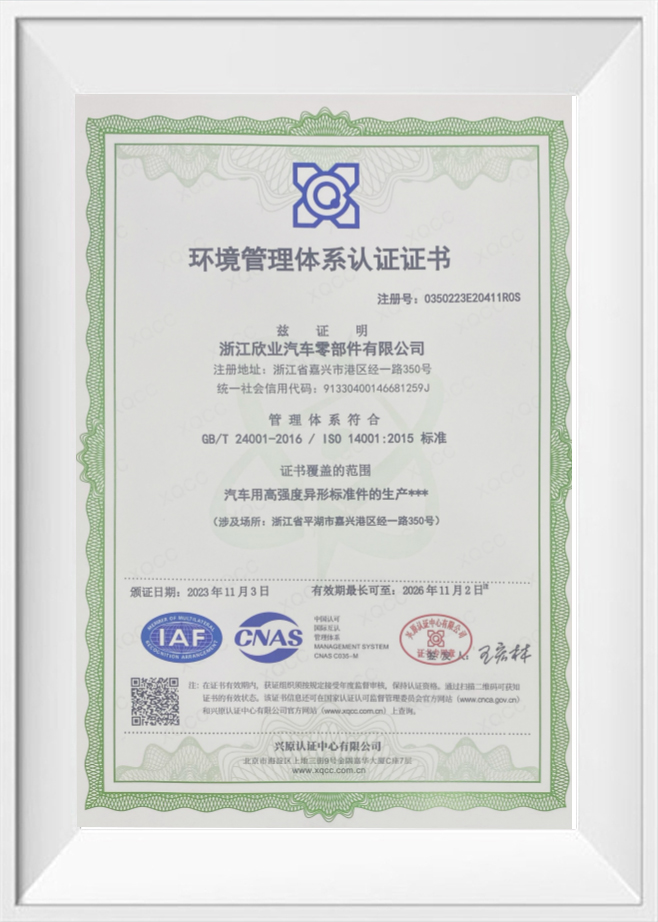
Certificate Of Honor
What’s News
Industry Insights & Updates
View All News
-
2026-11-03Industry News
-
2026-11-03Industry News
-
2026-11-03Industry News
Sliding Nuts Industry Knowledge
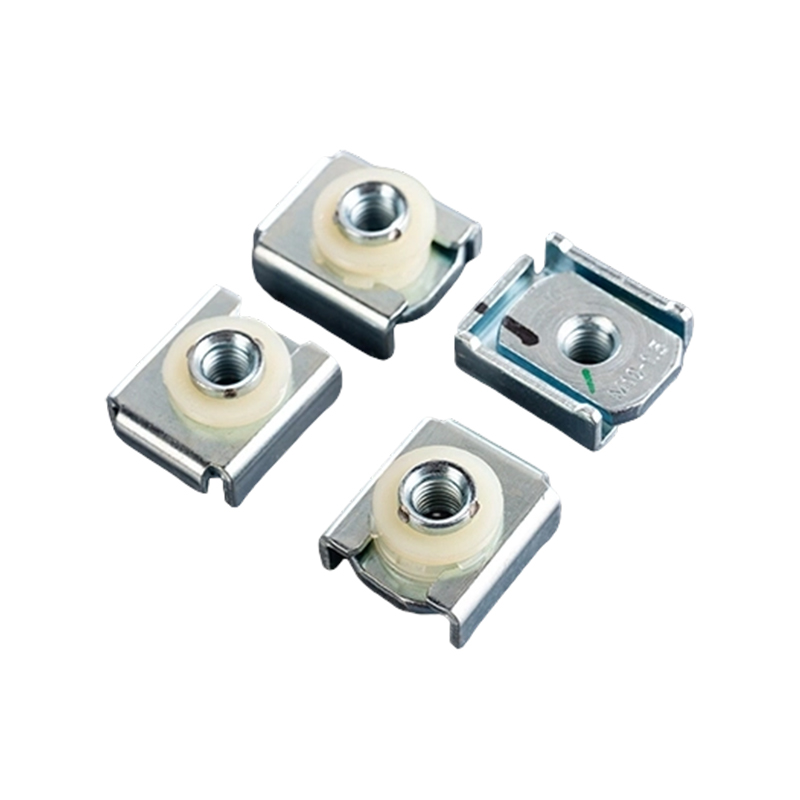
Zhejiangxinye Automobile Technology Co., Ltd. manufactures custom sliding nuts for automotive body, interior and chassis assemblies: floating cage nuts, clip nuts with nylon washers and spring cage nuts that give a bolted joint room to move before it is tightened. Production runs from our factory in Jiaxing Port Area, Zhejiang Province, China, alongside weld nuts, flange nuts, clinch nuts and stamped parts, so one assembly can be supplied against a single set of material, coating and inspection rules.
Fastener manufacturing here dates back to 1995, the plant is certified to IATF 16949-2016, and more than 500 product varieties are in production. As Custom Sliding Nuts Suppliers, Exporter, we build this category around stamped and welded panels where hole positions shift, where a fixed nut would load the joint in shear, or where the reverse side of the panel is out of reach.
Our Sliding Nut Range and Where Each Configuration Fits
Three configurations cover most sliding nut applications. They differ in how the nut is retained inside the cage, how far it can float and which surface the nylon washer contacts. Each can be produced to a customer drawing rather than only to a catalogue size.
| Configuration | Construction and Retention | Typical Application Fit | Installation |
|---|---|---|---|
| Cage type floating clip nut with nylon washer | Stamped cage clips into the panel; the nut floats inside the cage window | Square or rectangular holes on body panels, brackets and trim attachments | Push-in by hand or with a seating tool; replaceable before final torque |
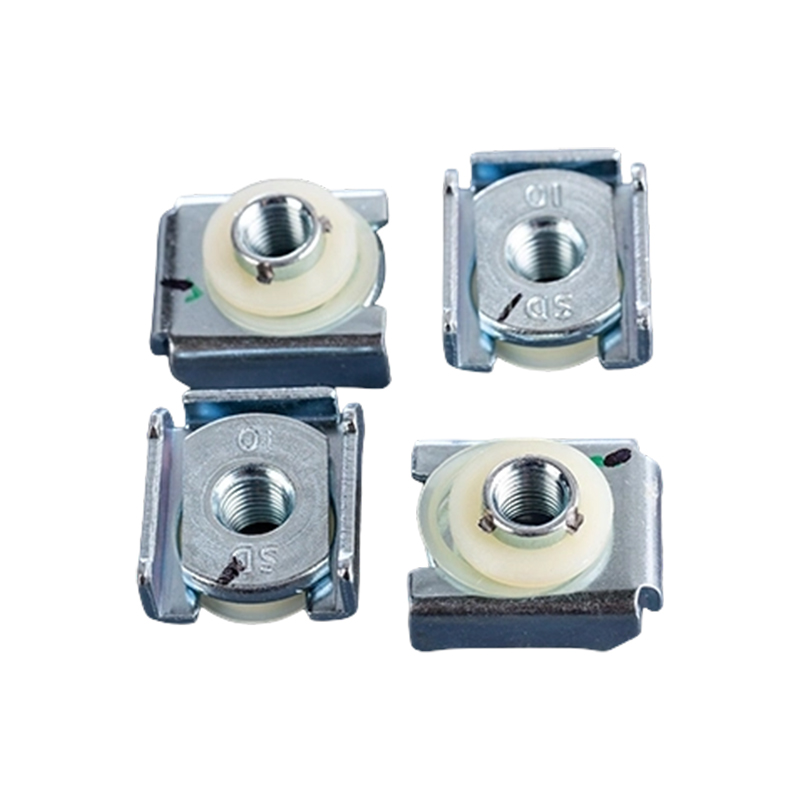
| Floating cage nut with nylon washer | Captive floating nut with an integral washer seat in the cage | Joints needing isolation from squeak, vibration or steel-to-steel contact | Locate in the cage, seat to the hole, then engage the bolt |
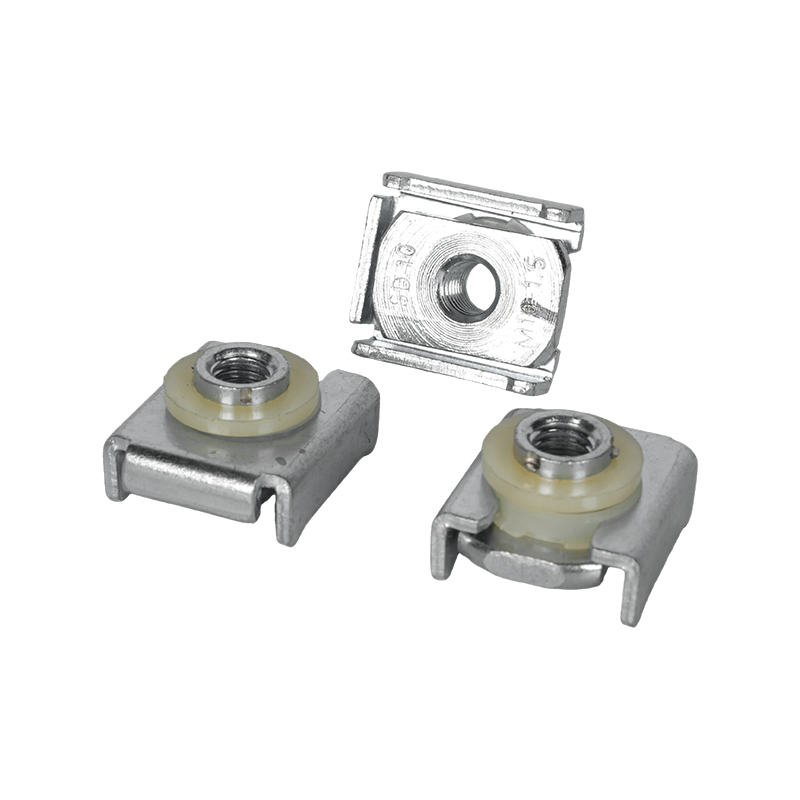
| Carbon steel floating spring cage nut | Spring-steel cage holds pre-load on the panel while allowing lateral float | Thin-gauge and high-vibration locations where rattle-free retention matters | Clip into the hole; clamp force set by spring geometry |
Application Fit Across Body, Interior and Chassis Assemblies
Sliding nuts are chosen where the mating hole cannot be held to a tight position: multi-stage welded body subassemblies, long brackets, seat frames and interior trim carriers. The cage absorbs positional variation so the bolt enters cleanly at the specified torque instead of cross-threading or dragging the panel out of position.
- Stamped and welded panels: hole-to-hole variation across a welded assembly is taken up by float rather than by opening the hole.
- Thin-gauge sheet: clamp load is spread through the cage and washer, avoiding the distortion that weld heat can put into a light panel.
- Blind-side joints: retention comes from the panel hole, so no backing access or second operator is needed.
- Service and rework: a clip nut can be replaced without cutting a weld or scrapping the panel.
- NVH-sensitive areas: the nylon washer separates steel from steel and removes a squeak and fretting path.
Where a permanent joint suits the process and the panel can take weld heat, weld nuts stay the economical choice. Where a pressed-in, flush, load-bearing thread is required on a single-side panel, clinch nuts are the alternative. Sliding nuts are specified when alignment tolerance, more than joint strength alone, drives the design.
Materials, Strength Grades and Surface Finishing
Our nut and stamping lines are supported by an in-house surface finishing line, so base material, heat treatment and coating are agreed as one specification rather than assembled from separate suppliers.
- Base materials: carbon steel for nut bodies and standard cages; spring steel where the cage must maintain pre-load on the panel.
- Strength grades: production from class 8 and class 10 through class 12, with class 13–14 ultra-high-strength variants in pre-research for heavy-duty and high-load joints.
- Corrosion protection: trivalent zinc plating tested to 480 hours salt spray, and zinc-nickel alloy plating from 480 to 720 hours salt spray.
- Temperature grades: three coating and material grades rated at 300 °C, 550 °C and 650–700 °C for exhaust and engine-periphery positions.
- Washers: moulded nylon washers sized to the cage seat, specified for anti-squeak, electrical isolation or light sealing duty.
Dimensional Control and Thread Behaviour
Cage window size, nut thickness, clip height and thread position decide whether a sliding nut floats freely and still aligns at torque. We control critical features within tolerance bands from 0.06 mm to 0.30 mm depending on the characteristic and the assembly method.
The MAT self-correcting thread guides a slightly misaligned bolt back onto the correct thread path over the first few turns, which reduces line stoppages and thread damage in automated driving operations. Thread size, pitch and class are produced to the drawing and checked with gauges; hardness is verified on sample parts from each heat treatment batch.
Installation and Line Integration
Cage geometry and spring rate set the seating force, the retention through conveying and paint cure, and the float direction. We agree these at drawing stage so the part behaves predictably in the customer's station, whether it is fitted by hand or presented by a feed system.
- Float can be defined for a single axis or two axes, depending on which direction the assembly variation runs.
- Panel hole size and shape, sheet thickness and edge distance are matched to the clip legs to give a firm seat without distorting the cage.
- Bolt chamfer and lead-in length are reviewed together with the nut thread so the self-correcting feature works as intended.
- Torque values and clamp load are confirmed against the panel material and the washer type before release.
Quality Assurance and Acceptance
Zhejiangxinye operates to IATF 16949-2016 with written work instructions for special and critical processes and inspection at each production step. Raw material analysis, cold heading, tapping, heat treatment, thread rolling and finished mechanical performance testing are all carried out in-house.
Acceptance characteristics are fixed when the drawing is approved: thread size and class, across-flats and height, cage window dimensions, clip opening, spring retention force, plating thickness, salt-spray duration and appearance. Inspection records and material certificates for the agreed characteristics accompany production lots, and first-article samples are submitted for line trials before series supply.
Information We Use to Configure Your Solution
A sliding nut is only as good as the panel it clips into. The details below let us match cage, nut and coating to the joint the first time and issue a proposal without assumptions.
| Project Input | How It Changes the Configuration |
|---|---|
| Panel hole size, shape and sheet thickness | Sets clip leg geometry, seating force and cage height |
| Bolt thread size, pitch, class and target torque | Defines nut strength grade, thread engagement and washer bore |
| Coating and required salt-spray hours | Selects trivalent zinc or zinc-nickel, plus coating thickness limits on the thread |
| Service temperature at the joint | Chooses material and finish grade for exhaust or engine-periphery duty |
| Assembly method and float direction | Determines single-axis or two-axis float and handling features on the cage |
| Annual volume, pack quantity and labelling | Sizes the production batch and packaging scope for the delivery schedule |
Drawings, 3D models or a sample part are the fastest route to an accurate quotation. Where a drawing does not yet exist, we work from the panel hole, the mating bolt and the clamp load to propose a geometry. The full automotive nut range is available for mixed shipments with sliding nuts.
Packaging, Traceability and Replacement
Sliding nuts ship in bulk cartons or in the pack quantity agreed for the customer's line, with batch identification linked to the production record so a coating or heat treatment batch can be traced. Because these parts are damaged by deformed cages rather than by wear, replacement stock is supplied to the same drawing revision; any change to hole size or bolt size requires a new configuration rather than an adaptation on the line.
Frequently Asked Questions
What are sliding nuts used for in vehicle assembly?
They provide a captive, floating thread in a panel that has no rear access or where welded and stamped holes cannot be held to a tight position. The float lets the bolt find the thread at torque, so body panels, brackets, seat structures and interior trim can be assembled without reworking holes.
Can you produce sliding nuts to our drawing instead of a standard size?
Yes. Cage geometry, clip legs, nut thickness, thread and coating are built from the customer drawing or a sample. Non-standard variants outside the three listed configurations are handled through our non-standard nut programme.
Which finish should be specified for underbody locations?
For underbody and exposed chassis points we recommend zinc-nickel plating at 480 to 720 hours salt spray. Interior and dry-zone joints are normally served by trivalent zinc at 480 hours, which keeps coating build-up on the thread within a workable range.
How do you prevent cross-threading during automated driving?
The MAT self-correcting thread realigns a slightly offset bolt over its first turns, and we control thread position relative to the cage window so the nut sits square to the bolt axis. Bolt chamfer and lead-in are reviewed with the customer's fastener at drawing approval.
What is the purpose of the nylon washer?
It separates the nut from the panel, removing a steel-to-steel contact that generates squeaks and fretting, and it can also provide electrical isolation or light sealing at the joint. Washer thickness and bore are matched to the nut and the required clamp load.
What information do you need to quote a custom sliding nut?
A drawing or sample, the panel hole and sheet thickness, the bolt specification and torque, the required coating and salt-spray hours, the service temperature, annual volume and packaging preference. With those inputs we return a configuration and quotation against the agreed acceptance characteristics.
Related Products and Categories
Our portfolio also includes Cage Type Floating Clip Nut With Nylon Washer for applications with different operating ranges, interfaces or integration requirements.
- Contact Us
-
-
861260628@qq.com

zj@xy-nuts.com -
+86 15888350558

-
No.350 Jingyi Road, Jiaxing Port Area, Zhejiang Province, China.

-
- Quick Links
- Products
- About Us
- Capabilities
- Service
- News
- Contact Us
- Product
- Nuts
- CNC Machined Components, Sleeves & Pins
- Specialty & Functional Automotive Components
- Metal Stampings
- Bolts & Screws
- Mobile
Copyright ©
Zhejiangxinye Automobile Technology Co. , Ltd.
All Rights Reserved
Custom
Sliding Nuts Suppliers
