

 Español
 عربى
product
product
product
product
product
product
product
product
product
product
product
product
product
product
product
product

Product Category
Contact us
Message Feedback
About Us
30 Years of Expertise in Automotive Fasteners
Zhejiangxinye Automobile Technology Co. , Ltd. traces its origins to 1995, evolving from Jiaxing Zhapu Xinye Standard Parts Co., Ltd. We are China Seat Belt Nuts Suppliers and Custom
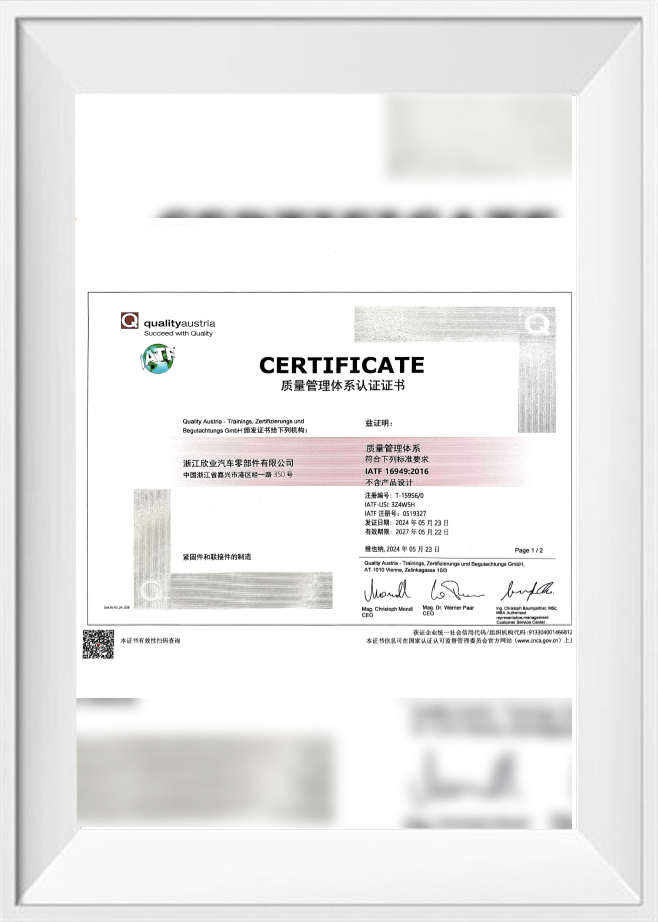
Seat Belt Nuts factory. The company specializes in the production of various automotive fasteners and stamping parts, including flange nuts, welding nuts, and more. For over 30 years, Xinye has kept pace with industry trends, focusing on technological innovation and internal management, and has achieved steady growth. The company is now certified to IATF 16949-2016.
Adhering to the principle of "surviving by product quality, developing by technological innovation," Xinye takes quality as its foundation and customer satisfaction as a top priority, committed to providing suitable and reliable products. To enhance product competitiveness and strengthen employee quality awareness, the company has established a sound management system and standardized process flows. Work instructions have been developed for special and critical processes, and strict quality inspections are conducted at every step. From raw material analysis to finished product mechanical performance testing, process control is implemented to ensure product conformity. The continuously improving quality management system and stable product performance have earned the company market recognition, as well as customer trust and praise.
Adhering to the principle of "surviving by product quality, developing by technological innovation," Xinye takes quality as its foundation and customer satisfaction as a top priority, committed to providing suitable and reliable products. To enhance product competitiveness and strengthen employee quality awareness, the company has established a sound management system and standardized process flows. Work instructions have been developed for special and critical processes, and strict quality inspections are conducted at every step. From raw material analysis to finished product mechanical performance testing, process control is implemented to ensure product conformity. The continuously improving quality management system and stable product performance have earned the company market recognition, as well as customer trust and praise.
-
0m2
Factory Area
-
0
Brand Origin
-
0+
Product Range
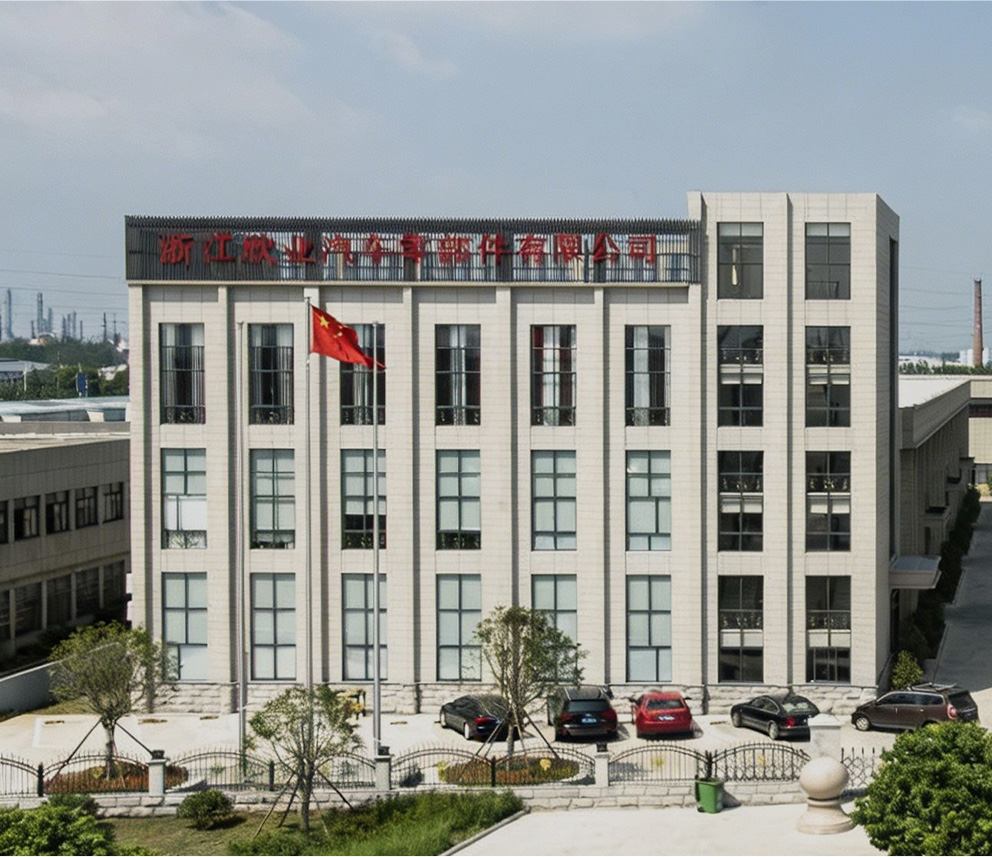

Zhejiangxinye Automobile Technology Co. , Ltd.
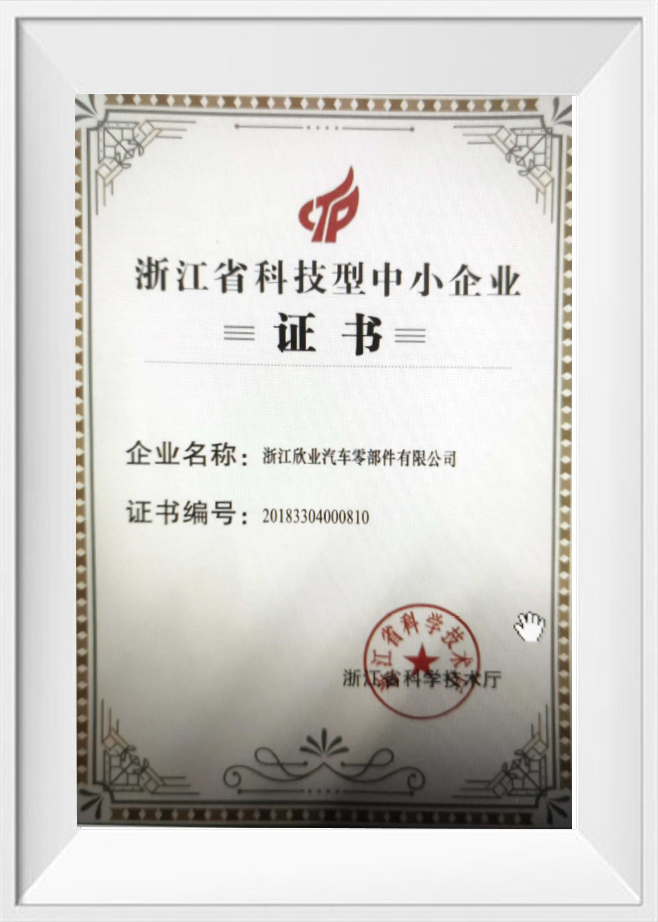
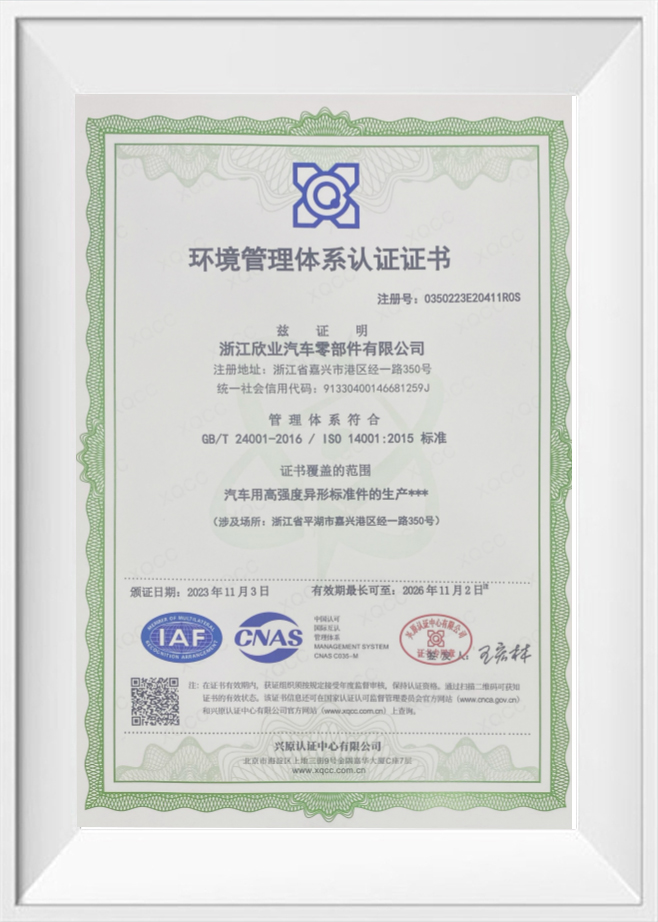
Certificate Of Honor
What’s News
Industry Insights & Updates
View All News
-
2026-11-03Industry News
-
2026-11-03Industry News
-
2026-11-03Industry News
Seat Belt Nuts Industry Knowledge
Zhejiangxinye Automobile Technology Co., Ltd. manufactures automotive fasteners and stamping parts at our plant in Jiaxing Port Area, Zhejiang Province, and has done so since 1995. Our seat belt nut programme covers the internal-thread anchorage nuts that tie the belt buckle stalk, retractor and anchor plate into the vehicle body — produced in-house from raw material analysis through cold heading, tapping, heat treatment, thread rolling and mechanical performance testing, within an IATF 16949-2016 quality management system.
As China Custom Seat Belt Nuts Suppliers, Exporter, we build the anchorage nut to the customer drawing and the vehicle programme requirements behind it, not to a catalogue default.
A Seat Belt Nut Carries the Anchorage Load Path
The nut sits at the end of the load path between the occupant and the body structure, so its thread engagement, flange bearing area and welding interface matter as much as the webbing itself. Thread size, mechanical class and flange geometry are set by the anchorage calculation and appear on the drawing; our job is to hold those characteristics repeatably across every lot.
- Thread: internal thread sized to the anchorage bolt, with pitch and class verified by gauge.
- Flange: square flange spreads clamp load over the panel and gives the assembly a rotational stop.
- Mounting holes: four-hole pattern locates the nut in the weld fixture and defines the joining zone on the body-in-white.
Our Current Seat Belt Nut Configuration
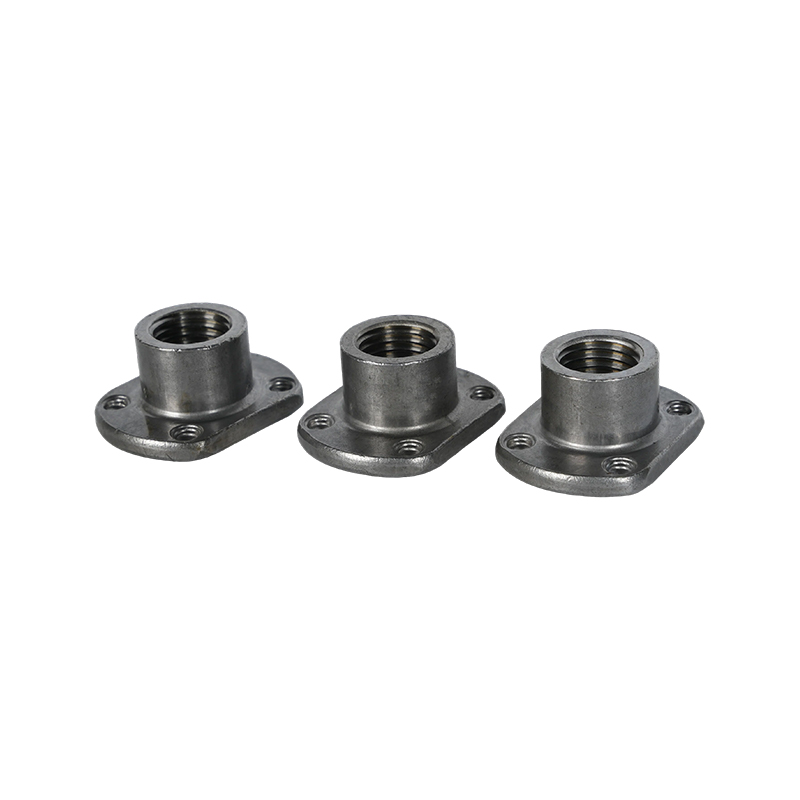
The lead item in this category is the Carbon Steel 7/16 Safety Belt Nut: a four-hole square flange mounting nut with internal thread, specified for automobile safety belt assemblies. Carbon steel keeps the part cold-headable and heat-treatable to the strength class the anchorage requires, while the square flange and four-hole pattern suit robot or fixture placement on a panel.
Where a programme needs a different thread, flange shape, hole pattern, class or finish, we quote from the drawing and confirm feasibility before tooling is released.
Configuration Matrix
| Parameter | What We Confirm Before Production | Why It Matters in the Assembly |
|---|---|---|
| Thread size and pitch | Nominal thread, pitch, class of fit, gauge standard | Anchorage bolt engagement and torque retention |
| Flange form | Square or round, flange diameter, thickness, corner radius | Bearing area on the panel and rotation resistance |
| Mounting interface | Number and position of holes, weld projections, pilot geometry | Fixture location and joining method on the body structure |
| Property class | Required class, proof load, hardness window | Anchorage strength margin under crash load |
| Material and heat treatment | Steel grade, hardenability, quench and temper condition | Toughness, hydrogen risk control, weld compatibility |
| Surface finish | Trivalent zinc or Zn-Ni, coating thickness, salt-spray target | Corrosion life in cabin, sill or underbody locations |
| Thread entry | Chamfer, pilot thread, self-correcting entry available where drawing permits | Automated bolt start and cross-thread reduction |
| Marking and packing | Head marking, bulk or dunnage format, labelling per line requirement | Traceability and feed at the assembly station |
Materials, Heat Treatment and Strength Class
Cold heading, tapping, heat treatment and thread rolling run in sequence in our own plant, so the mechanical properties of the finished nut are controlled as one process rather than assembled from outsourced steps. Hardness testing follows heat treatment, and dimensional checks follow tapping and rolling.
- Strength development from Class 5/8 through Class 12, with Class 13–14 ultra-high-strength nuts in pre-research for heavy-duty and high-load applications.
- Tolerance control across a 0.06 mm to 0.30 mm range, matched to the fit the assembly needs.
- MAT self-correcting thread technology, where the drawing allows, guides the bolt onto the thread path during automated tightening.
Corrosion Protection and Temperature Grades
Coating selection follows the location of the anchorage point on the vehicle. Trivalent zinc plating is our standard corrosion finish at 480 hours salt spray; Zn-Ni alloy plating extends that to 480–720 hours for sills, wheelhouse and underbody-adjacent positions where road spray is continuous.
For anchorages close to exhaust or engine-bay heat, we offer three temperature grades at 300 °C, 550 °C and 650–700 °C, so the nut holds its properties where the surrounding structure runs hot.
Welding, Thread Engagement and Line Integration
Where the nut is joined to the body panel, the four-hole square flange locates the part in the fixture and provides the contact pattern for the joining process. Flange flatness and hole position are held so the nut seats squarely, which keeps weld current distribution and final anchorage alignment predictable.
Thread entry geometry is agreed against the tightening tooling on the customer line: a chamfered lead thread for hand or guided start, a self-correcting entry where robotic tightening runs at speed. Bulk packaging, dunnage and head marking are set to the feeding method at the station.
Quality Control and Acceptance
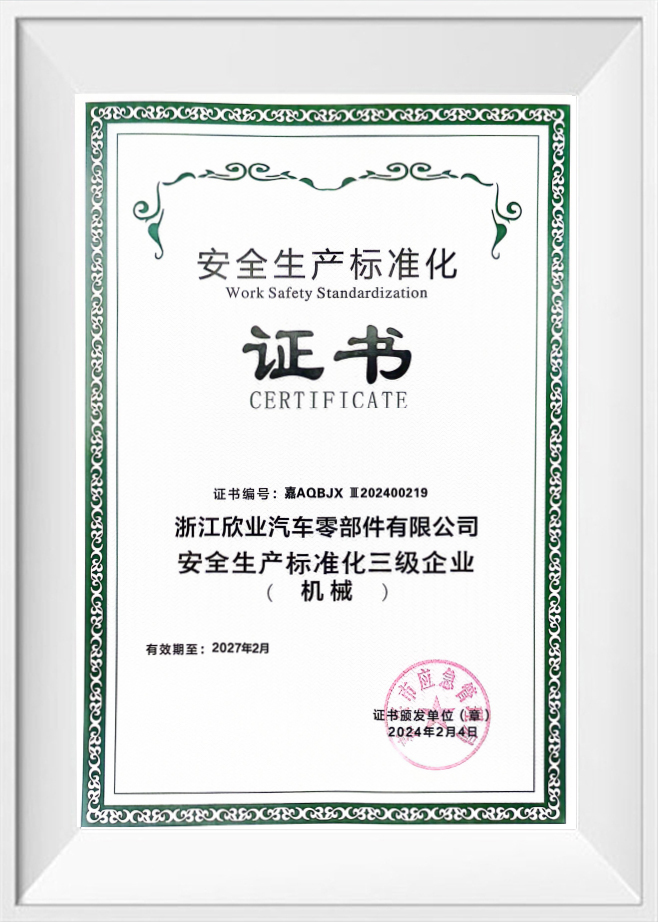
Our quality management system is certified to IATF 16949-2016, supported by environmental management system certification and work safety standardisation. Work instructions are issued for special and critical processes, and inspection points are defined at each step rather than concentrated at final inspection.
- Raw material analysis before heading, including grade and chemical verification.
- In-process inspection after heading, tapping, heat treatment, plating and thread rolling.
- Finished-part mechanical performance testing and hardness verification on testers in our own laboratory.
- Acceptance criteria fixed on the approved drawing and agreed test plan before the first production lot.
Where Seat Belt Nuts Fit in Our Fastener Range
Seat belt nuts sit inside a wider automotive fastener programme of more than 500 product varieties, which lets a seat or body programme draw several fastening families from one controlled source.
- Seat belt nuts: internal-thread anchorage nuts with square or round flange and mounting holes, as described above.
- Seat system nuts: fasteners for seat frame, track and recliner assemblies, supplied to the same drawing-led process.
- Seat adjustment shims and spacer nuts: height and position setting components for seat build variation control.
- Weld nuts and flange nuts: the wider family of projection-welded and flanged nuts used across body-in-white structures.
- Sealed nuts for EV battery pack: closed-end and sealing variants for battery enclosure fastening.
- Automotive nuts range: standard, self-locking, knurled, slotted, clinch, sliding and non-standard nuts.
Information We Use to Configure Your Solution
A usable quotation depends on the anchorage definition, not on a size alone. These are the inputs we work from when we prepare a configuration and price for a seat belt nut programme.
- Drawing or 3D model showing thread, flange, hole pattern and any weld geometry.
- Property class, proof load requirement and hardness acceptance window.
- Material grade and any restriction on steel source or chemistry.
- Coating type, coating thickness and salt-spray target.
- Joining method — projection welding, robotic bolt tightening or manual assembly.
- Annual volume, call-off pattern and packaging or labelling requirement at the line.
- Marking, traceability and documented test expectations for the part.
Frequently Asked Questions
Can you produce seat belt nuts to our own drawing rather than the 7/16 square flange pattern?
Yes. The 7/16 four-hole square flange nut is our current catalogue item in this category, but the seat belt nut line is built as custom manufacture. Thread, flange shape, hole pattern, class and coating are taken from your drawing, and we confirm feasibility and tooling before production is released.
Which strength class applies to a seat belt anchorage nut?
The class follows from the anchorage load calculation and is stated on the drawing. Our production capability runs from Class 5/8 up to Class 12, with Class 13–14 ultra-high-strength development in pre-research, and hardness is verified after heat treatment on every lot.
What corrosion protection do you recommend for underbody anchorage points?
Trivalent zinc plating gives 480 hours salt spray and covers cabin and upper body positions. For sills, wheelhouse areas and points exposed to continuous road spray, Zn-Ni alloy plating extends protection to 480–720 hours. Both finishes are applied on our in-house surface finishing line.
Do you support automated bolt starting on the assembly line?
Yes. Our MAT self-correcting thread technology, applied where the drawing permits, guides the bolt into the correct thread path when there is minor misalignment during automated tightening. Lead-thread chamfer and entry geometry are agreed against the tightening tooling used on your line.
How is quality documented from raw material to finished nut?
Raw material analysis, in-process inspection after each operation, heat treatment records and finished-part mechanical and hardness testing form the inspection chain under our IATF 16949-2016 system. Work instructions are issued for special and critical processes, and test documentation is agreed with the programme at order stage.
What is the background behind the fastener programme?
Zhejiangxinye Automobile Technology Co., Ltd. traces its origins to 1995 and has more than 30 years of automotive fastener and stamping experience, with all production completed in-house from raw material to finished goods. We are certified to IATF 16949-2016 and serve domestic and international automotive component suppliers.
- Contact Us
-
-
861260628@qq.com

zj@xy-nuts.com -
+86 15888350558

-
No.350 Jingyi Road, Jiaxing Port Area, Zhejiang Province, China.

-
- Quick Links
- Products
- About Us
- Capabilities
- Service
- News
- Contact Us
- Product
- Nuts
- CNC Machined Components, Sleeves & Pins
- Specialty & Functional Automotive Components
- Metal Stampings
- Bolts & Screws
- Mobile
Copyright ©
Zhejiangxinye Automobile Technology Co. , Ltd.
All Rights Reserved
Custom
Seat Belt Nuts Suppliers
