

 Español
 عربى
product
product
product
product
product
product
product
product
product
product
product
product
product
product
product
product

Product Category
Contact us
Standard Nuts Suppliers
Message Feedback
About Us
30 Years of Expertise in Automotive Fasteners
Zhejiangxinye Automobile Technology Co. , Ltd. traces its origins to 1995, evolving from Jiaxing Zhapu Xinye Standard Parts Co., Ltd. We are China Standard Nuts Suppliers and Custom
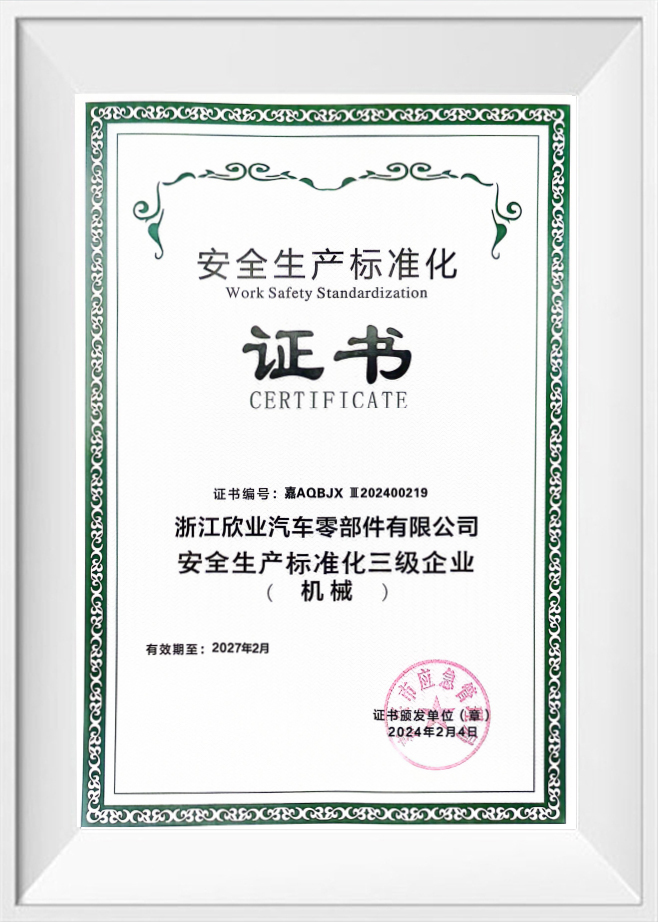
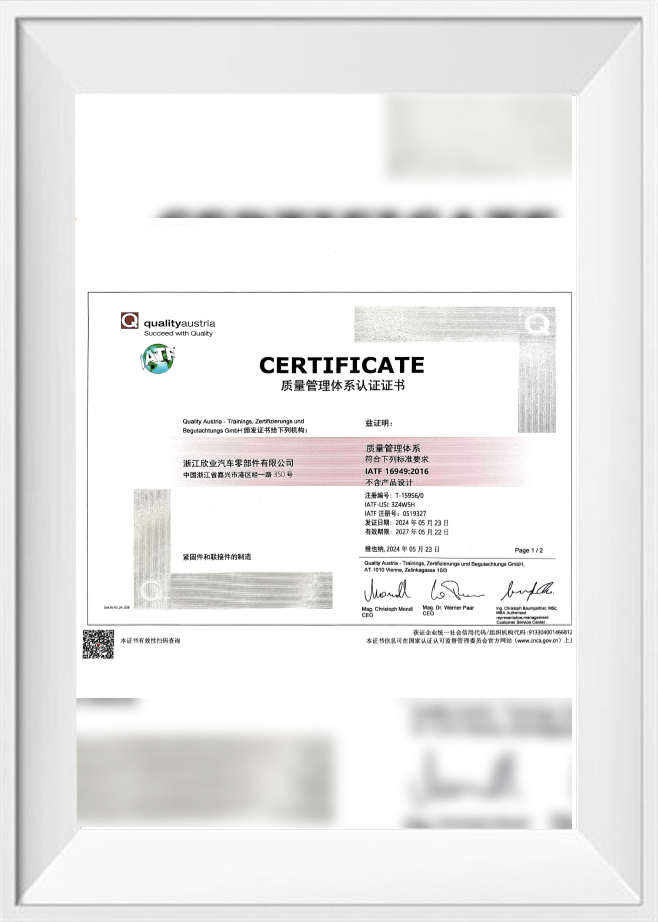
Standard Nuts factory. The company specializes in the production of various automotive fasteners and stamping parts, including flange nuts, welding nuts, and more. For over 30 years, Xinye has kept pace with industry trends, focusing on technological innovation and internal management, and has achieved steady growth. The company is now certified to IATF 16949-2016.
Adhering to the principle of "surviving by product quality, developing by technological innovation," Xinye takes quality as its foundation and customer satisfaction as a top priority, committed to providing suitable and reliable products. To enhance product competitiveness and strengthen employee quality awareness, the company has established a sound management system and standardized process flows. Work instructions have been developed for special and critical processes, and strict quality inspections are conducted at every step. From raw material analysis to finished product mechanical performance testing, process control is implemented to ensure product conformity. The continuously improving quality management system and stable product performance have earned the company market recognition, as well as customer trust and praise.
Adhering to the principle of "surviving by product quality, developing by technological innovation," Xinye takes quality as its foundation and customer satisfaction as a top priority, committed to providing suitable and reliable products. To enhance product competitiveness and strengthen employee quality awareness, the company has established a sound management system and standardized process flows. Work instructions have been developed for special and critical processes, and strict quality inspections are conducted at every step. From raw material analysis to finished product mechanical performance testing, process control is implemented to ensure product conformity. The continuously improving quality management system and stable product performance have earned the company market recognition, as well as customer trust and praise.
-
0m2
Factory Area
-
0
Brand Origin
-
0+
Product Range


Zhejiangxinye Automobile Technology Co. , Ltd.
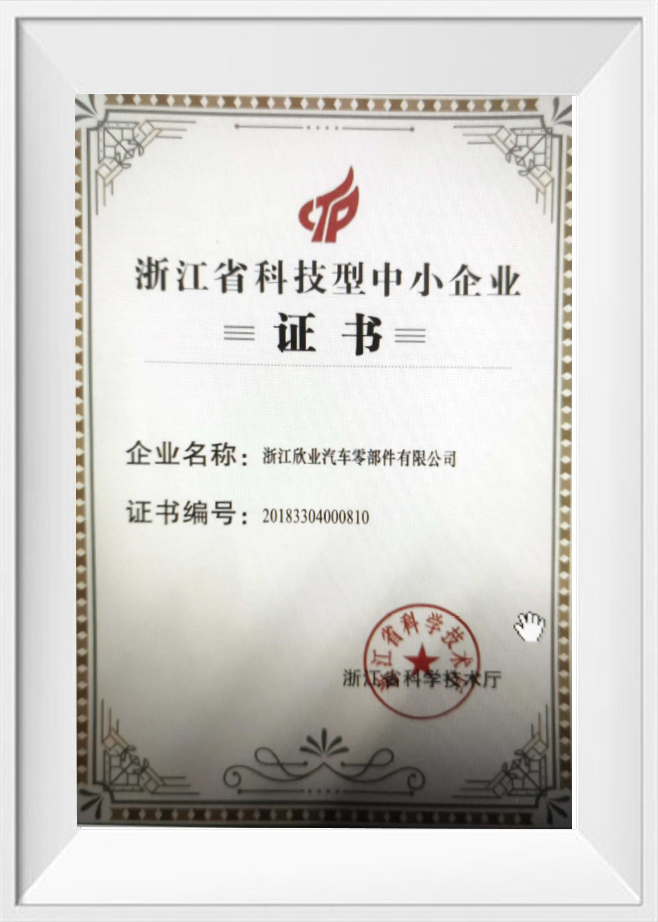
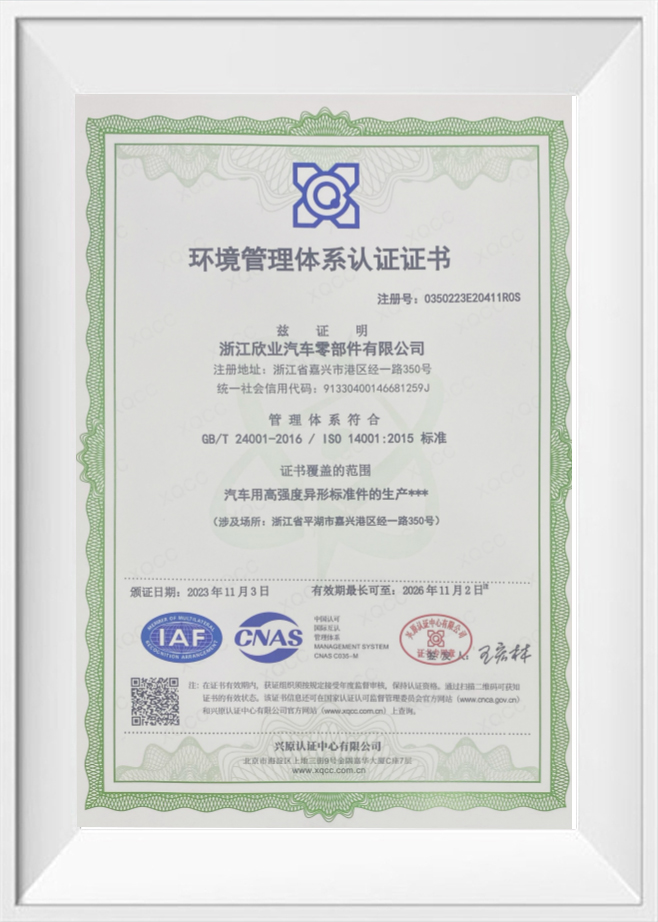
Certificate Of Honor
What’s News
Industry Insights & Updates
View All News
-
2026-11-03Industry News
-
2026-11-03Industry News
-
2026-11-03Industry News
Standard Nuts Industry Knowledge
Zhejiangxinye Automobile Technology Co., Ltd. has manufactured automotive fasteners in Jiaxing, Zhejiang Province since 1995 and runs cold heading, tapping, heat treatment, thread rolling and surface finishing as an in-house chain. The Custom Standard Nuts Suppliers, Exporter range on the category is the flange-nut family we build to GB/T and DIN references for chassis, body, seat, powertrain and battery-pack joints. Control runs from raw-material analysis through to mechanical performance testing under our IATF 16949-2016 system.
- 30 years of automotive fastener and stamping production, certified to IATF 16949-2016
- 500+ product varieties across nuts, bolts, screws, sleeves and stampings
- Class 5/8 to Class 12 strength development, with Class 13–14 ultra-high-strength nuts in pre-research
- 0.06–0.30 mm tolerance control, combined to suit each application rather than applied as one blanket band
Standard Nuts We Manufacture
Four standard geometries carry most of the demand we receive from automotive and industrial assembly lines. Each is produced in our own factory rather than bought in, so thread, flange and coating parameters stay under one process owner from heading to packing.
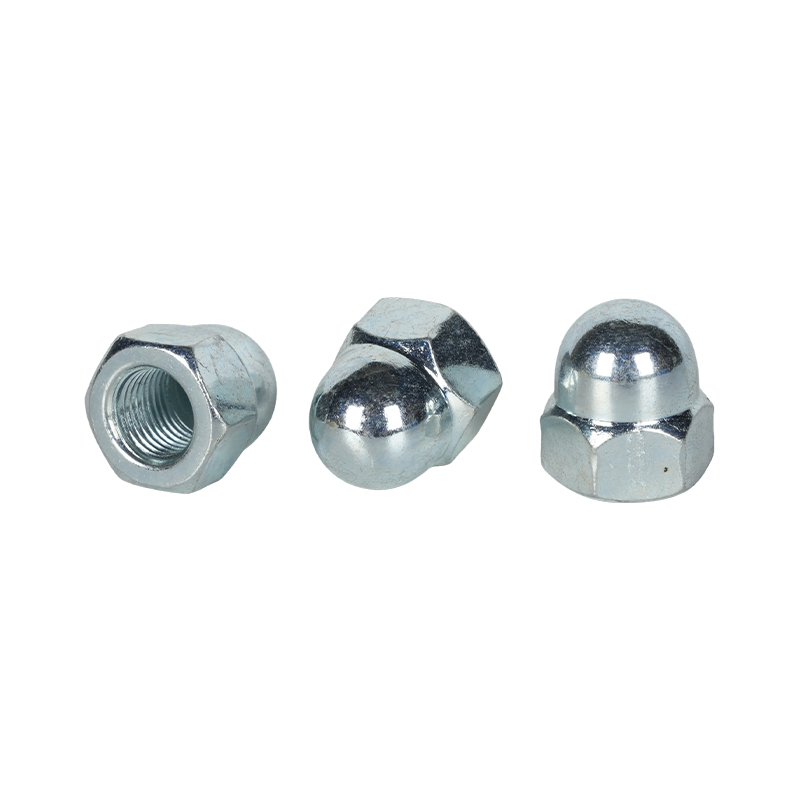
GB/T 802.3 Flange Domed Cap Nut
The domed cap closes the thread end so the stud is shielded from road spray, dust and paint, while the flange spreads clamp load across the bracket. We supply it for body brackets, seat structures and exposed fastening points where corrosion protection and finished appearance both count.
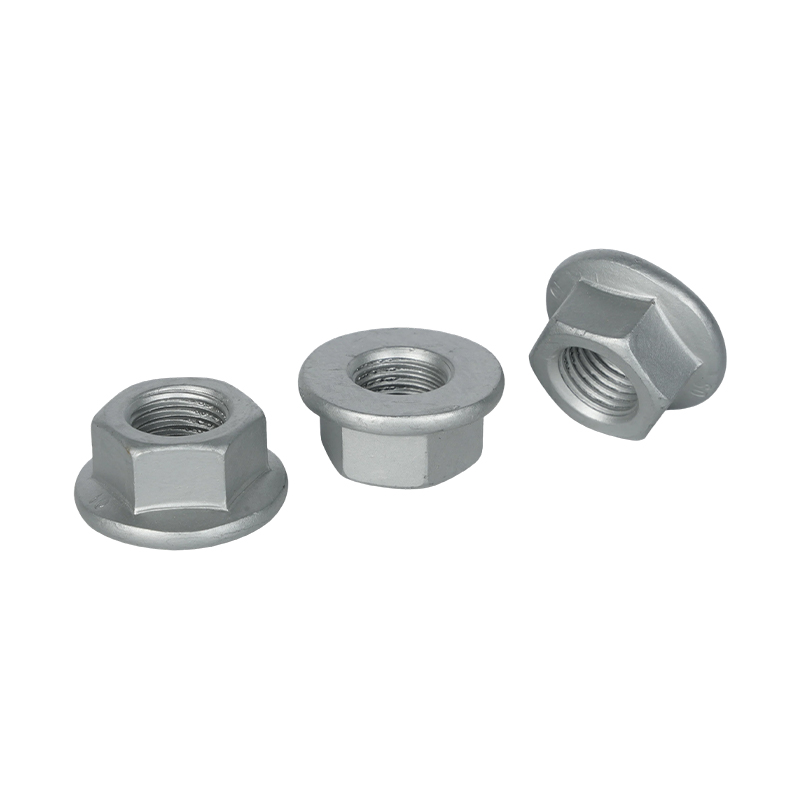
GB/T 6177 Hexagon Nuts with Flange / DIN 6923
An integrated flange replaces a separate washer and increases bearing area on thin-gauge panels and stampings. Typical positions are subframes, crossmembers, brackets and general assembly points where a plain hex nut would pull into the sheet.
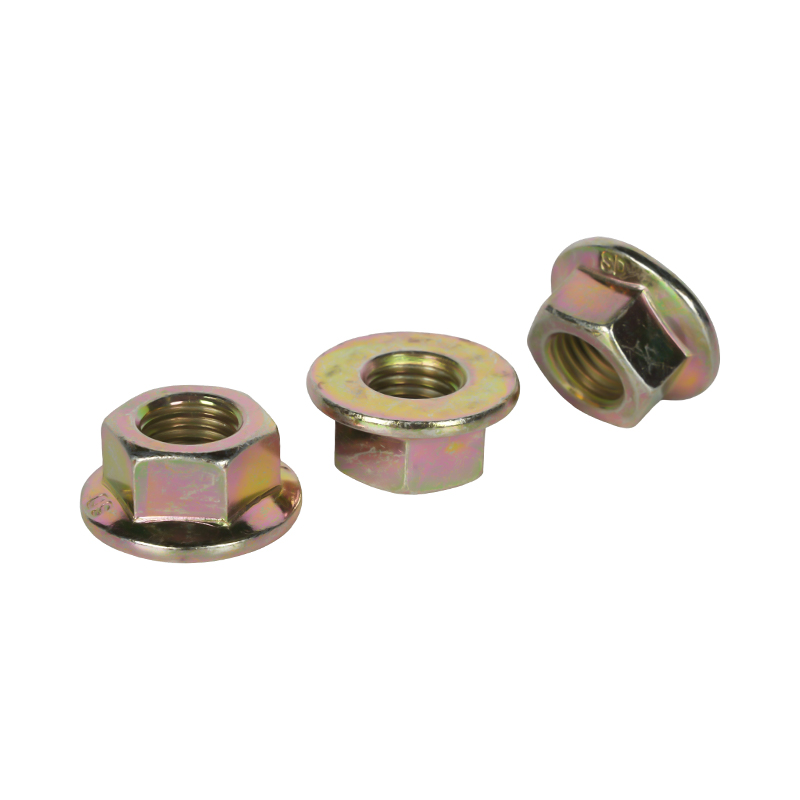
GB/T 6177 Serrated Hexagon Nuts with Flange, Yellow Zinc Plated
Serrations on the bearing face bite into the mating surface to resist loosening under vibration, which suits painted or coated brackets where a separate locking element is impractical. Yellow zinc plating is selected where appearance and moderate corrosion protection are the priority.
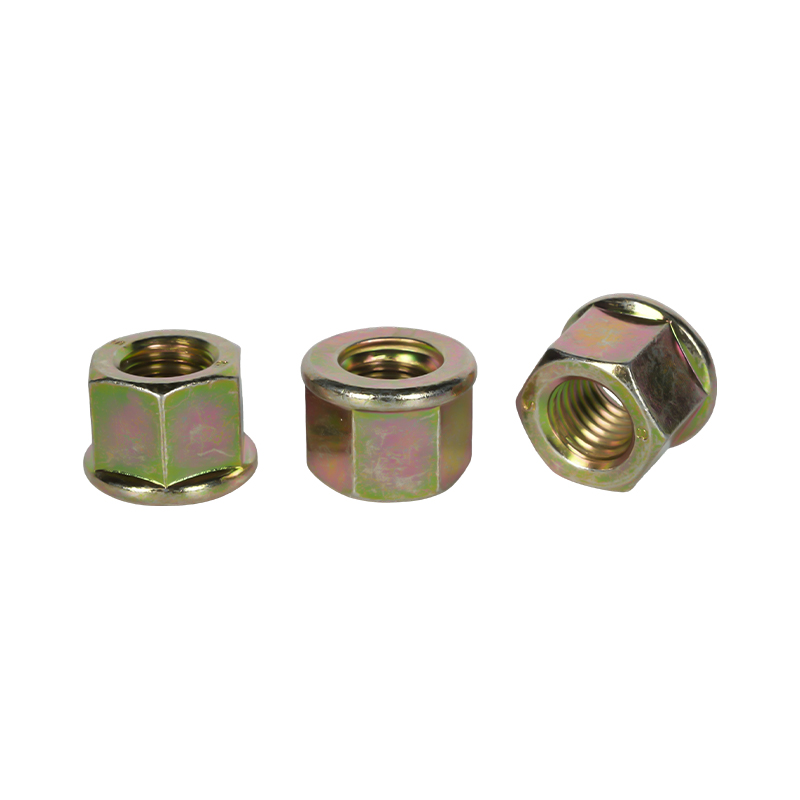
Thick Hex Flange Nuts, Yellow Zinc Plated
Extra nut height increases thread engagement and allows higher clamp load in the same footprint, so the part is used on suspension, steering and structural joints. The flange face keeps bearing pressure within the limits of stamped or cast mating components.
Around this family we also produce Weld Nuts for projection and spot-welded body joints and Self-Locking Nuts where a prevailing-torque element is specified. When a drawing steps outside the standard envelope, the part moves into our Non-Standard Nuts programme and keeps the same inspection route.
Application Fit Across Vehicle and Equipment Builds
Standard nuts are rarely the critical component on a drawing, but they set assembly speed and joint reliability. We match the geometry to the panel, the tool access and the torque method rather than supplying the same flange nut into every position.
- Body-in-white brackets, reinforcements and closure hardware
- Seat frames, rails and recliner mechanisms
- Chassis brackets, crossmembers and suspension mounts
- Battery-pack frames, covers and tray fixings on EV platforms
- Engine periphery, exhaust hangers and heat shields, using temperature-resistant grades
- General industrial frames, enclosures and machine guarding
Materials, Strength Grades and Thread Behaviour
Base material and heat treatment are selected together to reach the property class on the drawing, so a Class 8 nut and a Class 12 nut are not the same part with a different stamp. Our grade development has moved from early Class 5/8 production through Class 12 to pre-research on Class 13–14 ultra-high-strength nuts for heavy-duty truck and high-performance engine applications.
- Tolerance combinations built per application, from 0.06 mm to 0.30 mm
- MAT self-correcting thread: the first threads guide an offset bolt back into the correct path during automated assembly
- Thread fit verified against the mating bolt class, not dimension alone
- Hardness and mechanical performance checked after heat treatment
Surface Finishing and Environmental Performance
Plating and coating are developed and run in-house, which lets us adjust the finish when a joint moves to a wetter, saltier or hotter position on the vehicle.
| Finish | Corrosion performance | Where it fits |
|---|---|---|
| Trivalent zinc plating | 480 h salt spray | Body brackets, seat structures, general underbody |
| Zn-Ni alloy plating | 480–720 h salt spray | Chassis, battery-pack and high-corrosion zones |
| Yellow zinc plating | Appearance-led, moderate protection | Visible fasteners in dry or intermittently wet locations |
| Temperature-resistant grades | 300 °C, 550 °C and 650–700 °C classes | Exhaust systems, engine periphery, heat shields |
Configuration Choices We Confirm With You
Most standard-nut projects are settled by five or six decisions. We confirm each one against the joint and the assembly line before releasing a sample.
| Decision | Options we work to | Effect on the joint |
|---|---|---|
| Standard reference | GB/T 802.3, GB/T 6177, DIN 6923, drawing-specific variants | Dimensional envelope and mating hardware |
| Property class | Class 5/8 through Class 12 | Clamp load and joint safety factor |
| Thread | Metric coarse or fine; MAT self-correcting first threads | Assembly speed and misalignment tolerance |
| Bearing face | Plain flange, serrated flange, domed cap | Loosening resistance, stud protection, surface marking |
| Coating | Trivalent zinc, Zn-Ni alloy, yellow zinc | Corrosion life, friction coefficient, torque-tension scatter |
| Height and flange diameter | Standard or thickened, to drawing | Thread engagement and bearing pressure on the panel |
Quality Control and Lot Acceptance
Our quality route is written around the special and critical processes — heading, tapping, heat treatment, thread rolling and plating — with work instructions at each stage and inspection between them.
- Incoming raw material analysis before release to production
- In-process checks at heading, tapping and thread rolling
- Heat treatment verified by hardness testing
- Finished-part mechanical performance testing before packing
- Coating thickness and salt-spray verification on plated lots
- Lot identification retained so a delivery traces back to its material batch and process record
Assembly and Line Integration
Fastener behaviour at the station matters as much as the drawing. Flange diameter controls how the nut seats on a stamped bracket, serrations change the friction under the head, and coating lubricity shifts the torque-tension relationship on a controlled driver.
- MAT self-correcting threads reduce cross-threading stalls on robotic and multi-spindle drivers
- Symmetrical hex geometry supports bowl feeding and socket pick-up
- Coating friction is matched to the specified tightening strategy, from torque control to torque-and-angle
- Serration pattern and flange flatness confirmed for contact-sensitive panels and painted surfaces
Information We Use to Prepare Your Proposal
We quote from the joint and the line, not from a part name alone. The following inputs let us fix geometry, class, coating and inspection scope in one pass.
- Drawing or standard reference with revision, including any company-specific variant
- Property class, base material and any heat-treatment requirement
- Thread size, pitch and class of fit
- Coating type, salt-spray target and appearance requirements
- Mating bolt or stud, tightening torque and assembly method
- Monthly and annual quantities, call-off pattern and pack size
- Packaging, labelling, kitting or line-side presentation needs
- Documentation package, first-article expectations and destination
Packaging, Documentation and Delivery
Standard nuts ship in bulk cartons or labelled bags, with batch identification that links the pack to its material and process records. Documentation is issued with the shipment according to the agreed scope, and repeat orders are produced against the approved drawing and coating specification rather than re-interpreted each time.
Frequently Asked Questions
Which standards do your standard nuts follow?
We produce flange domed cap nuts to GB/T 802.3, flange nuts with and without serration to GB/T 6177 and DIN 6923 equivalents, and thick hex flange nuts to drawing. Where a customer uses an internal standard, that drawing governs the dimensions and acceptance criteria.
What property classes can you supply?
Our grade range runs from the early Class 5/8 parts through Class 12, with Class 13–14 ultra-high-strength nuts in pre-research for heavy-duty and high-performance applications. Because class is set by material and heat treatment together, it is confirmed at quotation rather than assumed from the standard reference.
How do you handle corrosion protection for exposed or underbody positions?
Trivalent zinc plating delivers 480 hours of salt spray and covers most body and bracket applications. Zn-Ni alloy plating extends that to 480–720 hours for chassis, battery-pack and other high-corrosion zones, and yellow zinc is specified where appearance and moderate protection are sufficient.
What is the MAT self-correcting thread?
The first few threads are formed to guide a slightly misaligned bolt back into the correct thread path during automated assembly. It reduces cross-threading rejects and stalls on robotic drivers without changing the nut's overall envelope.
Can a standard nut be modified for our joint?
Yes. Flange diameter, nut height, serration pattern, material, class and coating can all be adjusted, and the part is then produced within our non-standard programme under the same raw-material, heat-treatment and inspection controls.
What do you need to quote a standard nut order?
Send the drawing or standard reference, property class, thread specification, coating and salt-spray target, quantities and call-off pattern, plus packaging and documentation requirements. We confirm the configuration against the joint and return a proposal with the agreed inspection scope.
- Contact Us
-
-
861260628@qq.com

zj@xy-nuts.com -
+86 15888350558

-
No.350 Jingyi Road, Jiaxing Port Area, Zhejiang Province, China.

-
- Quick Links
- Products
- About Us
- Capabilities
- Service
- News
- Contact Us
- Product
- Nuts
- CNC Machined Components, Sleeves & Pins
- Specialty & Functional Automotive Components
- Metal Stampings
- Bolts & Screws
- Mobile
Copyright ©
Zhejiangxinye Automobile Technology Co. , Ltd.
All Rights Reserved
Custom
Standard Nuts Suppliers
