Frequently Asked Questions
Q: What is the difference between a standard flange nut and a thick flange nut?
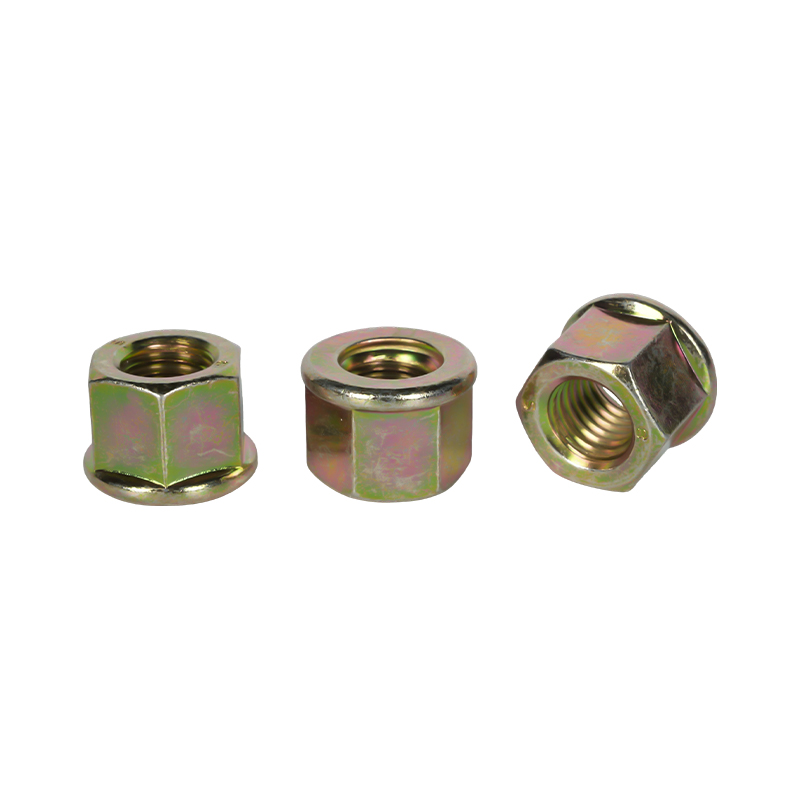
A: A thick flange nut has an increased nut height (body thickness) compared to standard flange nuts, providing greater thread engagement and increased load-carrying capacity for the threaded connection. The larger flange base provides enhanced bearing surface area for load distribution across the workpiece surface.
Q: What is the benefit of the yellow zinc plating?
A: The yellow zinc plating with chromate conversion coating provides corrosion resistance through zinc sacrificial protection and a barrier layer against environmental exposure. The yellow iridescent finish allows for visual identification and assembly inspection.
Q: Are these nuts suitable for outdoor applications?
A: Yes, the yellow zinc plating provides corrosion resistance for outdoor and atmospheric exposure applications. The level of corrosion resistance is determined by coating thickness and chromate treatment specifications, with salt spray test performance defined by applicable coating standards.
Q: Do the serrations damage the workpiece surface?
A: The serrations on the flange underside create mechanical interference with the mating surface to provide locking action. This may produce marks on softer workpiece materials. For applications where surface marking must be minimized, use of a flat washer under the flange or alternative locking methods may be considered.
Q: Can these nuts be reused after removal?
A: Reusability depends on the serration design and application conditions. The serrations may experience wear or deformation during initial installation and removal, which can reduce locking performance in subsequent applications. For critical applications or multiple assembly cycles, locking performance should be verified through torque testing.
Q: What is the recommended tightening torque for thick flange nuts?
A: Tightening torque values are determined by the nut performance grade, thread size, material grade, and application load requirements. Torque specifications should be obtained from engineering standards or calculation methods defined in fastener design guidelines, considering friction conditions influenced by surface treatment and lubrication.