

 Español
 عربى
product
product
product
product
product
product
product
product
product
product
product
product
product
product
product
product

Product Category
Contact us
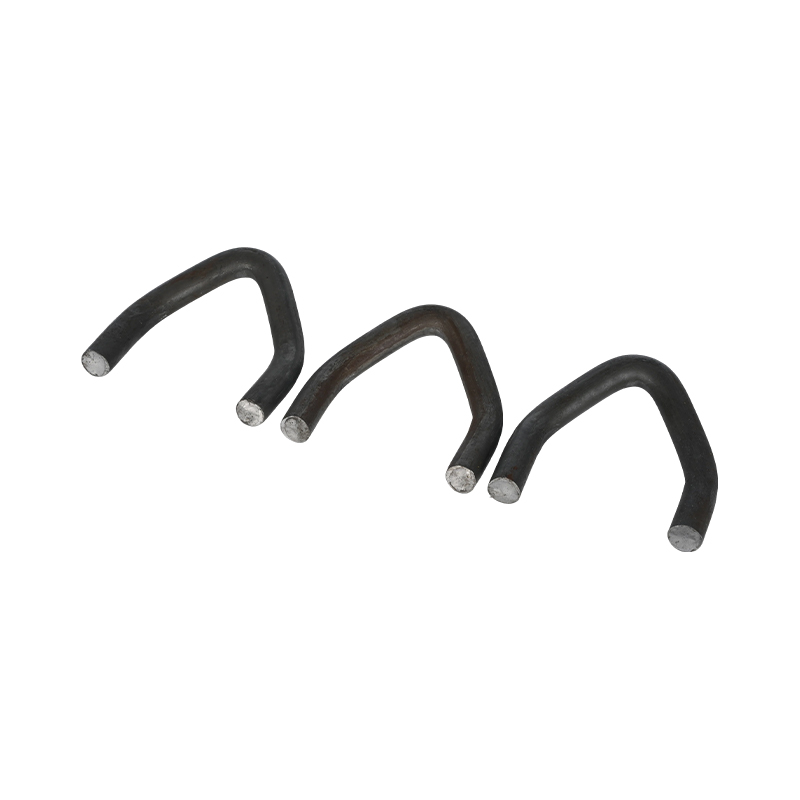
Tow Hooks For Automotive Body Suppliers
Message Feedback
About Us
30 Years of Expertise in Automotive Fasteners
Zhejiangxinye Automobile Technology Co. , Ltd. traces its origins to 1995, evolving from Jiaxing Zhapu Xinye Standard Parts Co., Ltd. We are China Tow Hooks For Automotive Body Suppliers and Custom
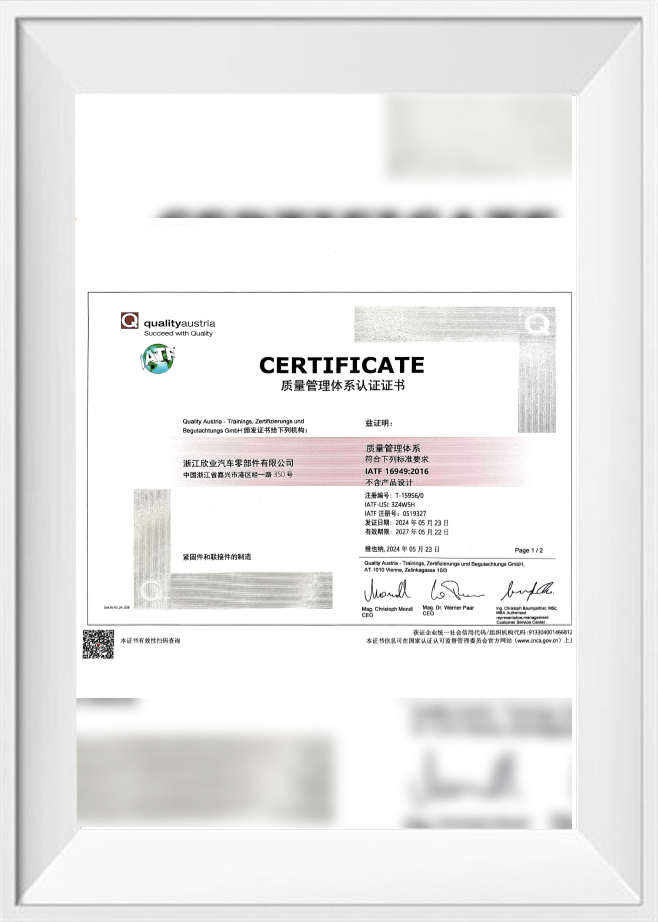
Tow Hooks For Automotive Body factory. The company specializes in the production of various automotive fasteners and stamping parts, including flange nuts, welding nuts, and more. For over 30 years, Xinye has kept pace with industry trends, focusing on technological innovation and internal management, and has achieved steady growth. The company is now certified to IATF 16949-2016.
Adhering to the principle of "surviving by product quality, developing by technological innovation," Xinye takes quality as its foundation and customer satisfaction as a top priority, committed to providing suitable and reliable products. To enhance product competitiveness and strengthen employee quality awareness, the company has established a sound management system and standardized process flows. Work instructions have been developed for special and critical processes, and strict quality inspections are conducted at every step. From raw material analysis to finished product mechanical performance testing, process control is implemented to ensure product conformity. The continuously improving quality management system and stable product performance have earned the company market recognition, as well as customer trust and praise.
Adhering to the principle of "surviving by product quality, developing by technological innovation," Xinye takes quality as its foundation and customer satisfaction as a top priority, committed to providing suitable and reliable products. To enhance product competitiveness and strengthen employee quality awareness, the company has established a sound management system and standardized process flows. Work instructions have been developed for special and critical processes, and strict quality inspections are conducted at every step. From raw material analysis to finished product mechanical performance testing, process control is implemented to ensure product conformity. The continuously improving quality management system and stable product performance have earned the company market recognition, as well as customer trust and praise.
-
0m2
Factory Area
-
0
Brand Origin
-
0+
Product Range
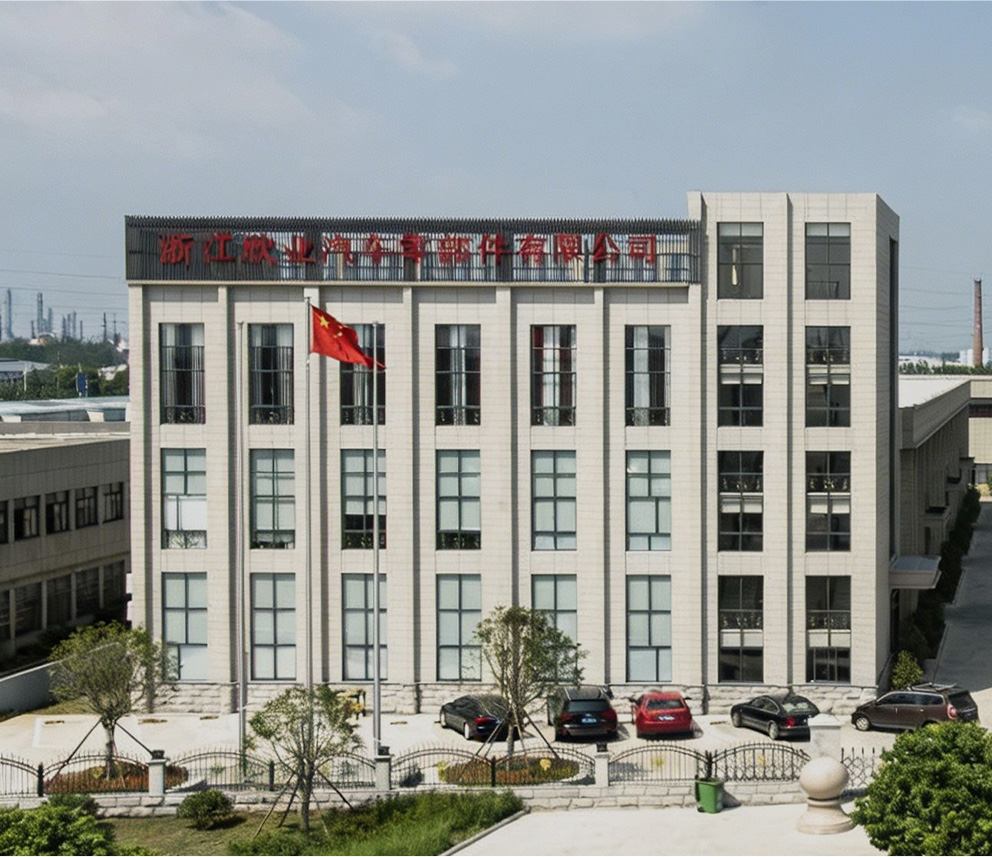

Zhejiangxinye Automobile Technology Co. , Ltd.
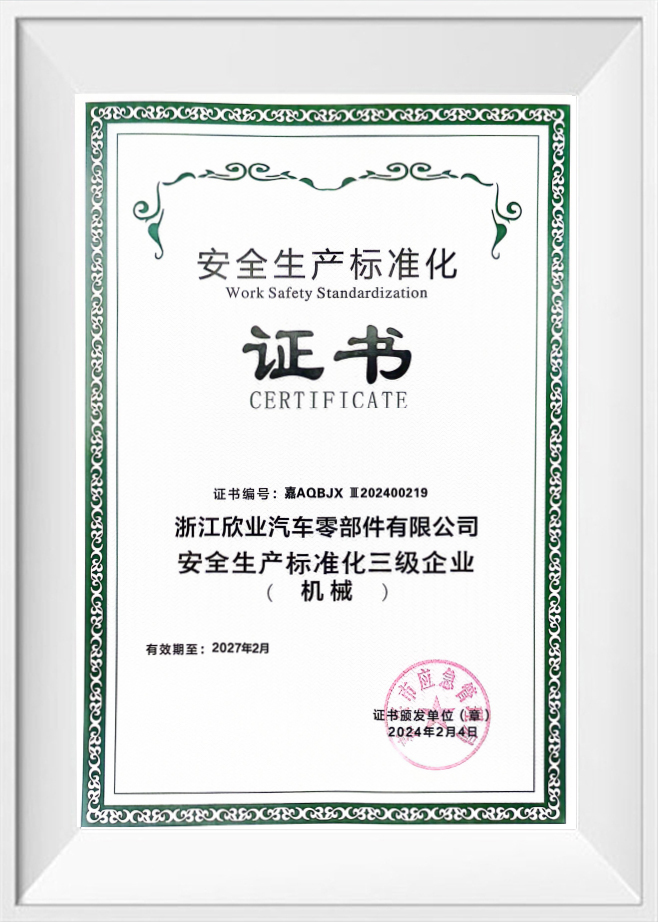
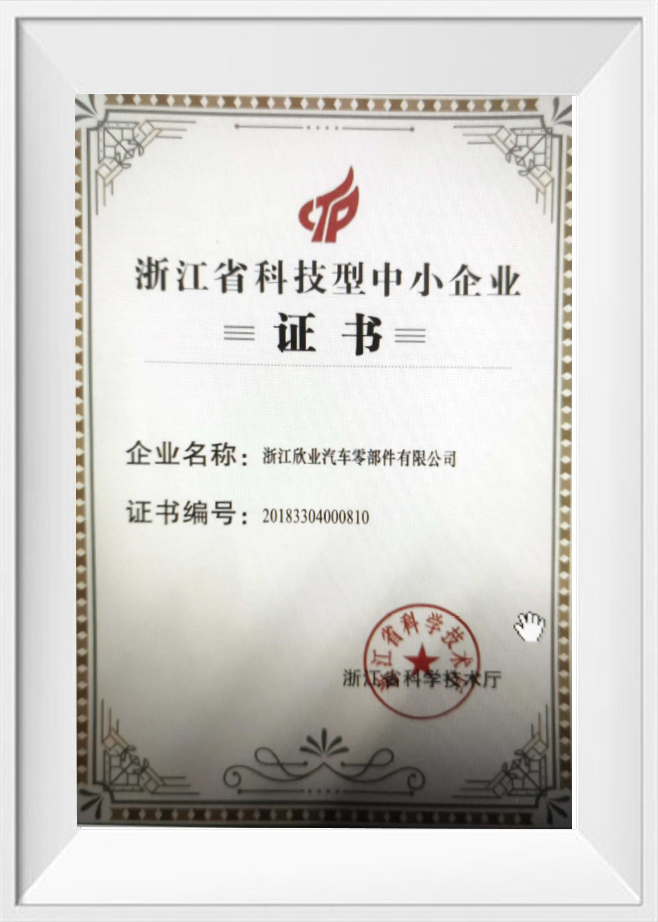
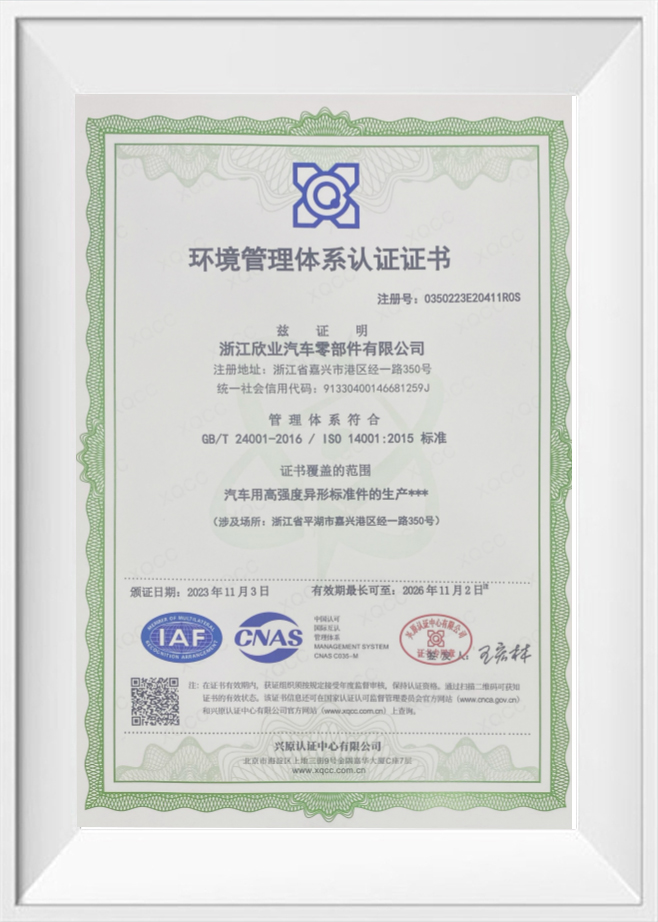
Certificate Of Honor
What’s News
Industry Insights & Updates
View All News
-
2026-11-03Industry News
-
2026-11-03Industry News
-
2026-11-03Industry News
Tow Hooks For Automotive Body Industry Knowledge
Zhejiangxinye Automobile Technology Co., Ltd. manufactures tow hooks for automotive body mounting and the hardware that carries the load into the vehicle structure, at our plant on Jingyi Road in the Jiaxing Port Area of Zhejiang, China. Production in this family centres on the carbon steel V-shape tow hook for automobile chassis, made in-house from raw material analysis through forming, threading, heat treatment, coating and mechanical performance testing. The company traces its origins to 1995 and is certified to IATF 16949-2016.
Xinye is a China manufacturer of Custom Tow Hooks For Automotive Body Suppliers, Exporter hardware: the V-shape chassis hook, welded bracket assemblies where the design requires them, and the nuts, sleeves and pins that complete the mounting. Vehicle assemblers, chassis tier suppliers, trailer builders and specialist converters use our parts where a defined recovery or tie-down point has to be built into the body structure.
Our Position in This Product Family
A tow hook is a safety-critical attachment point, so our engineering work starts with the load path rather than with a catalogue size. We form the V profile, cut and roll the thread, weld where the design calls for a bracket, heat treat to the specified property class and coat in-house, with every operation held to the drawing and the control plan.
Because the same plant produces fasteners, machined sleeves and stampings, the hook, its mating nut and any reinforcement boss are matched to one another before shipment instead of arriving from separate supply chains with separate tolerances.
- Complete in-house route from raw material analysis to finished mechanical performance testing
- IATF 16949-2016 certified quality management system with written work instructions for special and critical processes
- More than 500 product varieties across nuts, bolts, screws, sleeves and stamping parts
- Property class development from class 5 and 8 through class 12 production, with class 13–14 ultra-high-strength work in pre-research
The Range We Supply and Where Each Part Fits
The tow hook family sits inside our specialty and functional automotive components line, alongside related functional hardware. Every item is produced to drawing; the application column describes the position the part normally takes in a tow hook assembly.
| Item | Material and process | Application fit | Configuration data |
|---|---|---|---|
| Carbon Steel V Shape Tow Hook For Automobile Chassis | Carbon steel V body with threaded shank or eye, heat treated to the specified class, coated after forming | Chassis-mounted recovery point and transport tie-down on passenger cars, light commercial vehicles and trailers | Throat opening, shank thread, effective length, working load, property class, coating system |
| Welded hook and bracket assemblies | Hook body joined to a stamped bracket, weld prep machined, cleaned and coated after welding | Where the hook must follow a rail profile or offset around body structure | Bracket gauge, weld type and position, hole pattern, coating-free zones |
| Mounting nuts | Cold heading, tapping, heat treatment and in-house coating | Anchoring the hook bracket to chassis rails and thin-gauge mounting panels | Thread size, weld projection or flange diameter, property class, corrosion hours |
| Sleeves and reinforcement bosses | Machined from tube or bar, stepped, flanged or plain | Reinforcing the mounting eye where the panel is thin or clamp load is high | Bore, wall thickness, step geometry, length and concentricity tolerance |
| Retaining and cross pins | Turned, hardened where specified, coated | Demountable hook arrangements and articulated towing eyes | Diameter and tolerance, hardness, end configuration, retention method |
The mounting nuts, sleeves and pins are drawn from our wider nuts and machined-part families, so a hook and its complete attachment set can be released as one coordinated kit.
Material, Strength and Hook Geometry
Hooks are formed from carbon steel chosen for the required strength class and, where a bracket is joined to the hook body, for weldability. The V profile locates a strap or clevis and keeps the pull centred; throat opening, shank diameter, thread size, effective length and bend radius are all drawing-controlled features.
We set material section and property class from the rated working load and the intended pull direction — longitudinal, angled or vertical. Where the hook sits at the end of a long chassis rail, the bracket gauge and the reinforcement behind it are reviewed together so the load spreads into the structure instead of concentrating at one hole.
- Thread: metric coarse or fine, rolled, with the mating nut class matched to the hook
- Attachment: welded bracket, bolted flange, or demountable pin arrangement
- Finish allowance: pre-plate dimensions set so thread fit survives the coating layer
- Reference product: Carbon Steel V Shape Tow Hook For Automobile Chassis
Coating, Corrosion and Temperature Exposure
Surface finishing runs on our own line. Trivalent zinc plating is verified to 480 h salt spray, and zinc-nickel alloy plating to 480–720 h, which covers hooks exposed to road spray, wheel wash and winter de-icing salt. Coating choice interacts directly with thread fit, so pre-plate thread dimensions are set for the specified layer and the assembled nut is checked after coating.
Welded assemblies are cleaned and coated after welding, and we confirm at drawing approval which surfaces must stay coating-free for weld-through, earthing or clamp contact. For hooks mounted close to exhaust routing or engine peripherals, we also review the temperature band of the mounting position against the selected coating system before releasing the process route.
Tolerances, Threads and Line-Side Assembly
Dimensional control in our plant covers ranges from 0.06 mm to 0.30 mm depending on the feature, which allows us to hold hook geometry tight where it meets a strap while keeping forming tolerances practical on the body side. Thread rolling and tapping are done in-house on dedicated equipment.
For high-volume assembly we review how the hook is presented to the line: orientation in the fixture, thread start position, weld access and torque reaction. Where the hook ships with its nut, the pair is matched for the customer's torque tool so drive and clamp load stay inside the specified window.
Quality Control and Acceptance
The plant operates to IATF 16949-2016 with documented work instructions for special and critical processes including forming, tapping, heat treatment and coating. Inspection runs at each step, from incoming raw material analysis to finished mechanical performance testing on hardness testers and related equipment, so process control is applied rather than end-of-line sorting alone.
Acceptance scope for a tow hook order is fixed against the drawing before production: dimensions on the features that control fit and load path, hardness and property class verification, coating thickness, and salt spray performance for the specified coating system. Where a welded bracket is involved, weld appearance and position are inspected against the approved sample.
Information We Use to Configure Your Solution
A quotation is prepared from the following inputs. Missing items are resolved with you during drawing review rather than assumed, because throat size, thread and coating each change the process route.
- Vehicle platform, mounting position and pull direction of the hook
- Rated working load or target property class, and the safety factor applied in your design
- Attachment method: weld-on, bolted with nut and washer, or demountable with pin
- Hook geometry: throat opening, shank thread, effective length, bend radius, overall envelope
- Material grade, weldability requirement and any restriction on alloy content
- Coating system, required salt spray hours and coating-free zones
- Annual volume, batch size, packaging format and labelling standard
- 2D drawing or 3D model, revision level and required first-article timing
Installation, Inspection and Replacement
Hooks leave the plant ready for the drawing's assembly method: weld-prep surfaces left clean, threads protected through packing, and coating applied so the part can go directly to the line. Forming and thread parameters stay on file for repeat batches, so a replacement hook matches the originally approved geometry.
In service, a tow hook is a visual inspection item. Deformation at the bend, damaged threads or coating breakdown at the highest-stress area are the usual signs of an overload event, and the part is replaced rather than straightened.
Documentation, Packaging and Delivery Scope
Each order is released against an approved drawing with revision control; drawing, material grade, coating and packing method are fixed before the first batch runs. Parts ship from Zhejiang in export cartons, bulk packaging or returnable containers configured for the receiving line, and hook orders can be consolidated with nuts, sleeves and metal stampings from the same plant to keep a project's fastening content on one shipment schedule.
Frequently Asked Questions
What tow hook configurations does Xinye manufacture?
Our principal tow hook is the carbon steel V-shape hook for automobile chassis, supplied with a threaded shank or eye and, where the design requires it, joined to a stamped bracket. We also produce the mounting nuts, machined sleeves and pins that complete the attachment set, so the hook arrives as a coordinated assembly rather than as a single loose part.
Which material and coating are used for the V-shape chassis hook?
Hooks are formed from carbon steel selected for the required strength class and weldability, then heat treated and coated. Standard protection is trivalent zinc plating verified to 480 h salt spray; zinc-nickel alloy plating at 480–720 h is used for hooks that see heavy road salt or repeated wash cycles.
Can the hook be supplied together with its mounting fasteners?
Yes. Weld nuts, flange nuts, self-locking nuts, reinforcement sleeves and retaining pins come from the same plant, which means thread class, coating and corrosion hours can be aligned across the whole mounting instead of being reconciled between suppliers. Mixed packing and single-shipment consolidation are arranged at order confirmation.
What information is needed to prepare a tow hook quotation?
We need the drawing or model, mounting position and pull direction, rated working load or target property class, attachment method, material grade, coating and salt spray requirement, plus annual volume, batch size and packaging format. Drawing review follows, and any point that affects the process route is confirmed with you before pricing is finalised.
How is quality verified before a tow hook batch is released?
Under our IATF 16949-2016 system, inspection is applied at each production step and finished parts are checked for the dimensions that control fit and load path, hardness and property class, coating thickness and salt spray performance. Welded assemblies are additionally checked for weld position and appearance against the approved sample.
- Contact Us
-
-
861260628@qq.com

zj@xy-nuts.com -
+86 15888350558

-
No.350 Jingyi Road, Jiaxing Port Area, Zhejiang Province, China.

-
- Quick Links
- Products
- About Us
- Capabilities
- Service
- News
- Contact Us
- Product
- Nuts
- CNC Machined Components, Sleeves & Pins
- Specialty & Functional Automotive Components
- Metal Stampings
- Bolts & Screws
- Mobile
Copyright ©
Zhejiangxinye Automobile Technology Co. , Ltd.
All Rights Reserved
Custom
Tow Hooks For Automotive Body Suppliers
