

 Español
 عربى
product
product
product
product
product
product
product
product
product
product
product
product
product
product
product
product

Product Category
Contact us
Message Feedback
About Us
30 Years of Expertise in Automotive Fasteners
Zhejiangxinye Automobile Technology Co. , Ltd. traces its origins to 1995, evolving from Jiaxing Zhapu Xinye Standard Parts Co., Ltd. We are China Interior Trim Circlips & Springs Suppliers and Custom
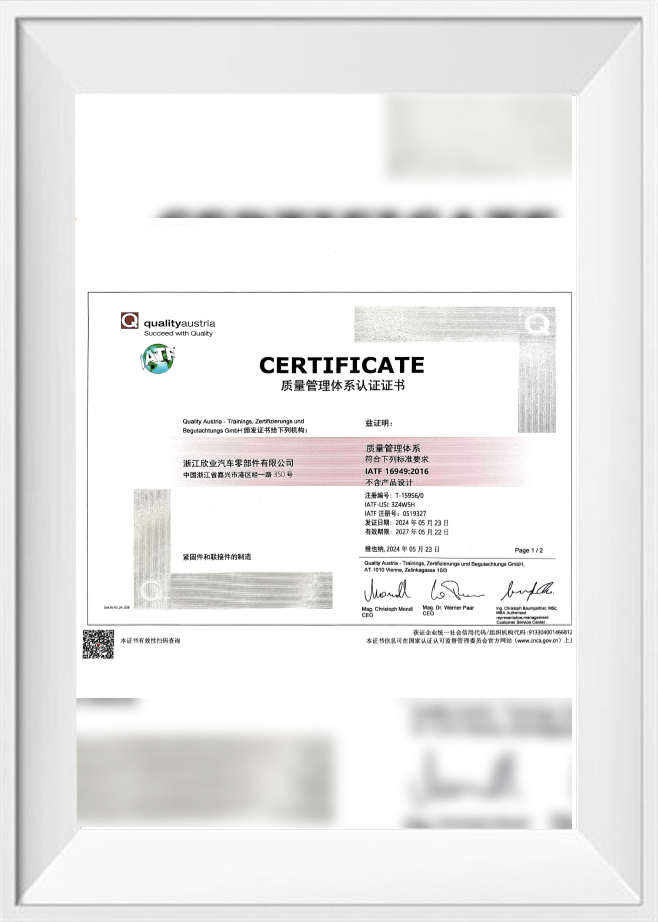
Interior Trim Circlips & Springs factory. The company specializes in the production of various automotive fasteners and stamping parts, including flange nuts, welding nuts, and more. For over 30 years, Xinye has kept pace with industry trends, focusing on technological innovation and internal management, and has achieved steady growth. The company is now certified to IATF 16949-2016.
Adhering to the principle of "surviving by product quality, developing by technological innovation," Xinye takes quality as its foundation and customer satisfaction as a top priority, committed to providing suitable and reliable products. To enhance product competitiveness and strengthen employee quality awareness, the company has established a sound management system and standardized process flows. Work instructions have been developed for special and critical processes, and strict quality inspections are conducted at every step. From raw material analysis to finished product mechanical performance testing, process control is implemented to ensure product conformity. The continuously improving quality management system and stable product performance have earned the company market recognition, as well as customer trust and praise.
Adhering to the principle of "surviving by product quality, developing by technological innovation," Xinye takes quality as its foundation and customer satisfaction as a top priority, committed to providing suitable and reliable products. To enhance product competitiveness and strengthen employee quality awareness, the company has established a sound management system and standardized process flows. Work instructions have been developed for special and critical processes, and strict quality inspections are conducted at every step. From raw material analysis to finished product mechanical performance testing, process control is implemented to ensure product conformity. The continuously improving quality management system and stable product performance have earned the company market recognition, as well as customer trust and praise.
-
0m2
Factory Area
-
0
Brand Origin
-
0+
Product Range
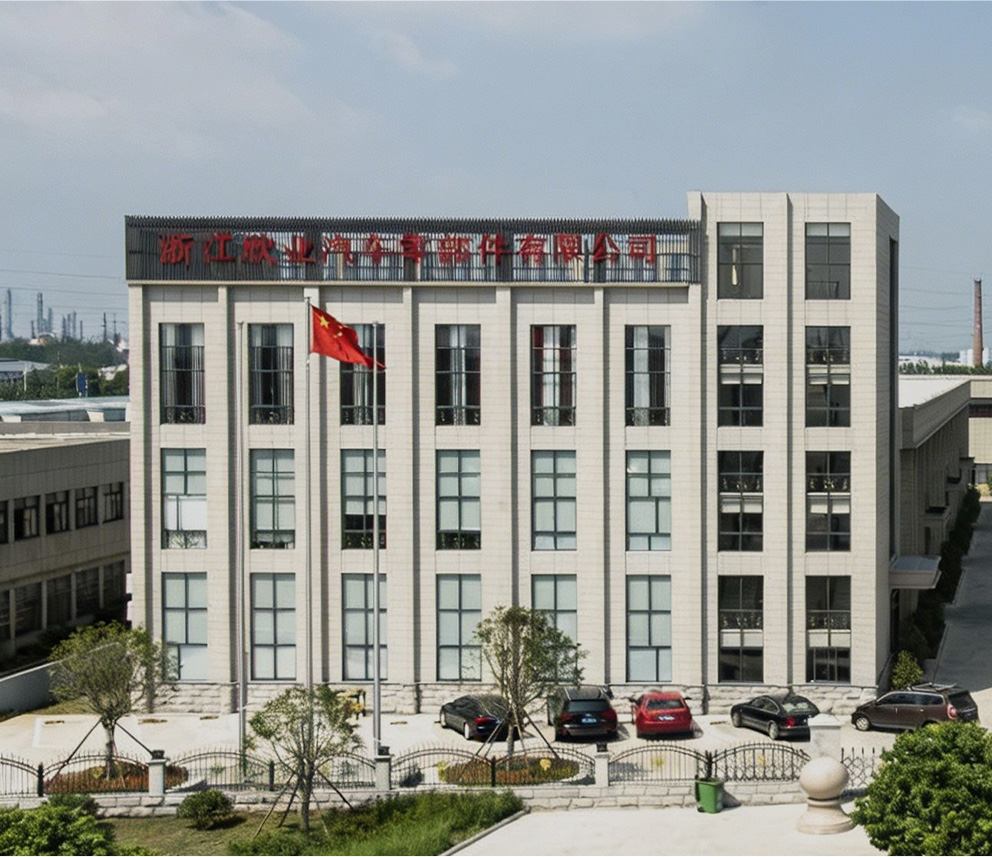

Zhejiangxinye Automobile Technology Co. , Ltd.
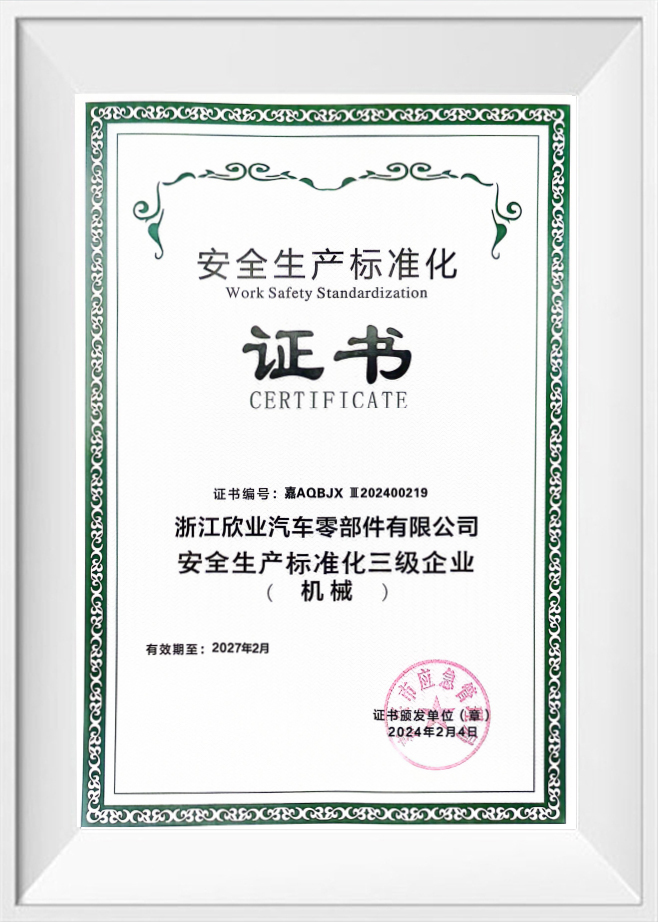
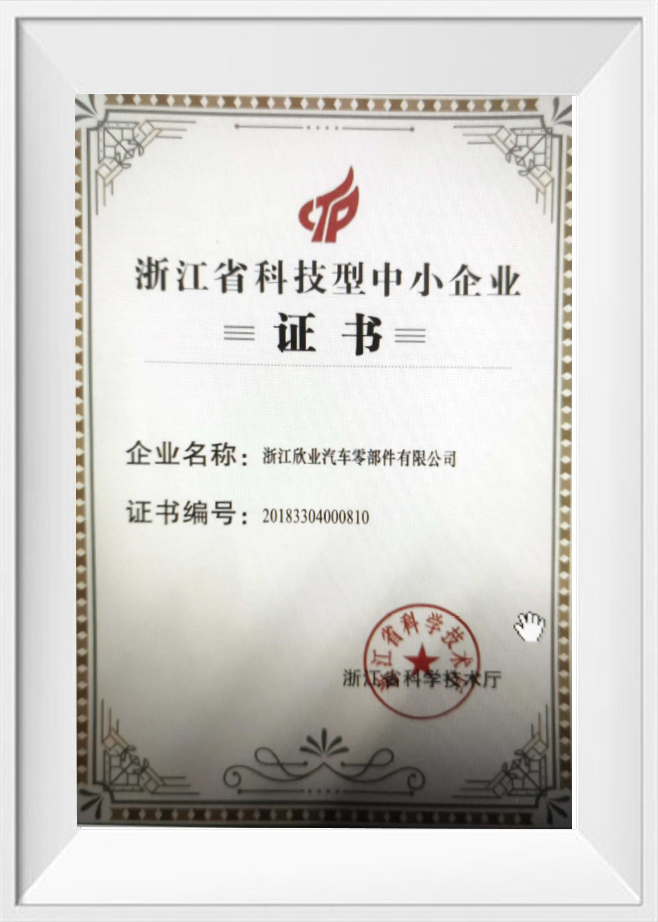
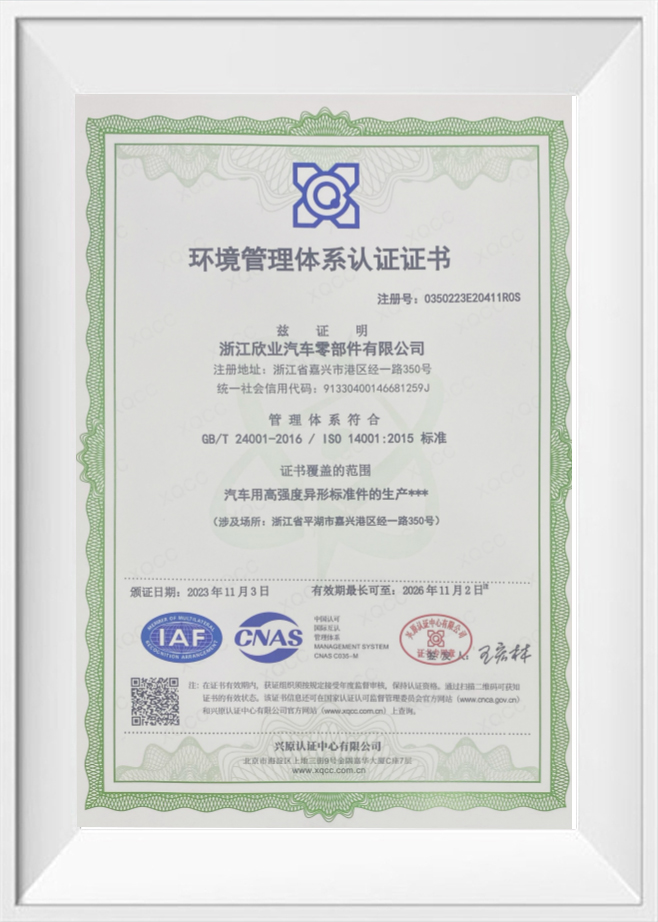
Certificate Of Honor
What’s News
Industry Insights & Updates
View All News
-
2026-11-03Industry News
-
2026-11-03Industry News
-
2026-11-03Industry News
Interior Trim Circlips & Springs Industry Knowledge
Zhejiangxinye Automobile Technology Co., Ltd. manufactures custom interior trim circlips, spring clip nuts and dual coil torsion springs for automotive interior assemblies. Our history starts in 1995 in Jiaxing, Zhejiang Province, China, and we produce automotive fasteners and stamped parts in-house — from raw material analysis to finished-part inspection — under an IATF 16949-2016 quality management system.
Trim retention is a spring problem before it is a fastener problem. A clip has to hold a panel with stable clamp load, absorb substrate thickness variation, survive press-fit assembly without cracking and stay quiet through thermal cycling. Our clip and spring series are configured around those four requirements, and around the assembly line that will install them.
Four Series in Our Interior Trim Range
The Custom Interior Trim Circlips & Springs Suppliers, Exporter range is organised into four series, each produced to a drawing rather than a catalogue number.
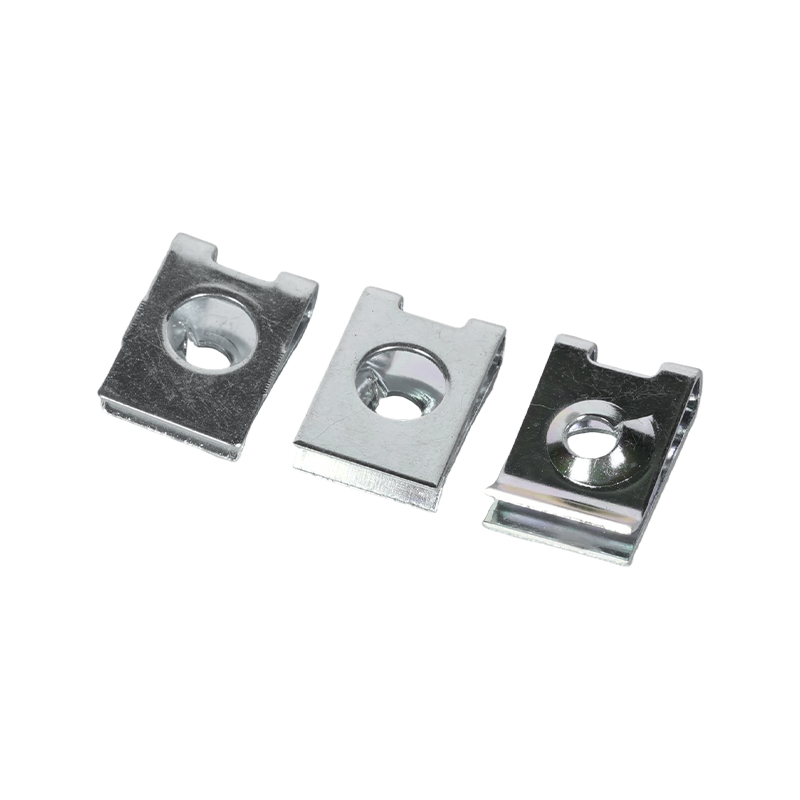
Carbon Steel Spring Clip Nut
A single-body clip formed from carbon steel strip. It snaps onto a panel flange or trim substrate so a screw can drive into the formed thread — the standard fixing for door cards, pillar trims, garnish mouldings and console side panels where the back of the panel is closed.
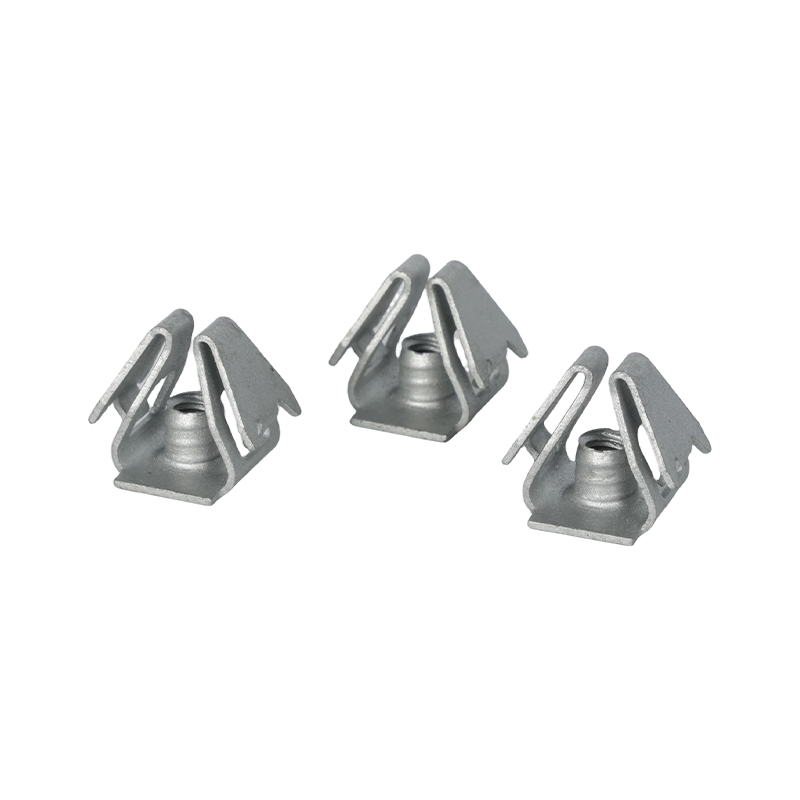
Carbon Steel Double Spring Clip Nut
Two spring legs instead of one widen the grip range and raise pull-out resistance on long or heavier trim panels. It suits quarter trim, load-bearing trim interfaces and substrates whose thickness tolerance is broad.
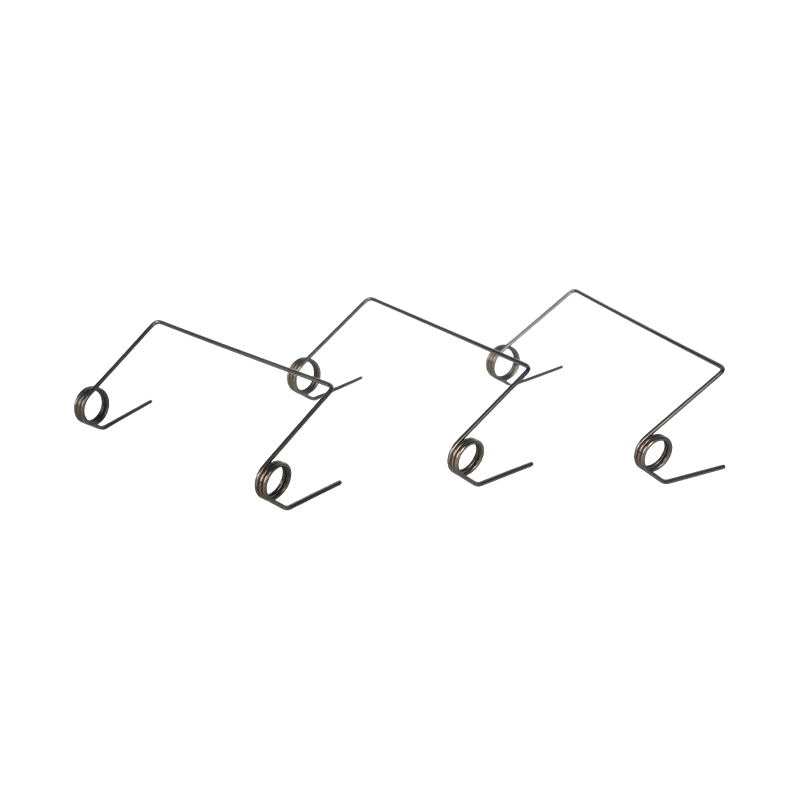
Dual Coil Torsion Spring for Automotive Interior Parts
Two coils on a common axis balance torque and reduce side load on the hinge pin. Typical fit: armrest lids, glovebox doors, console covers and grab handle returns.
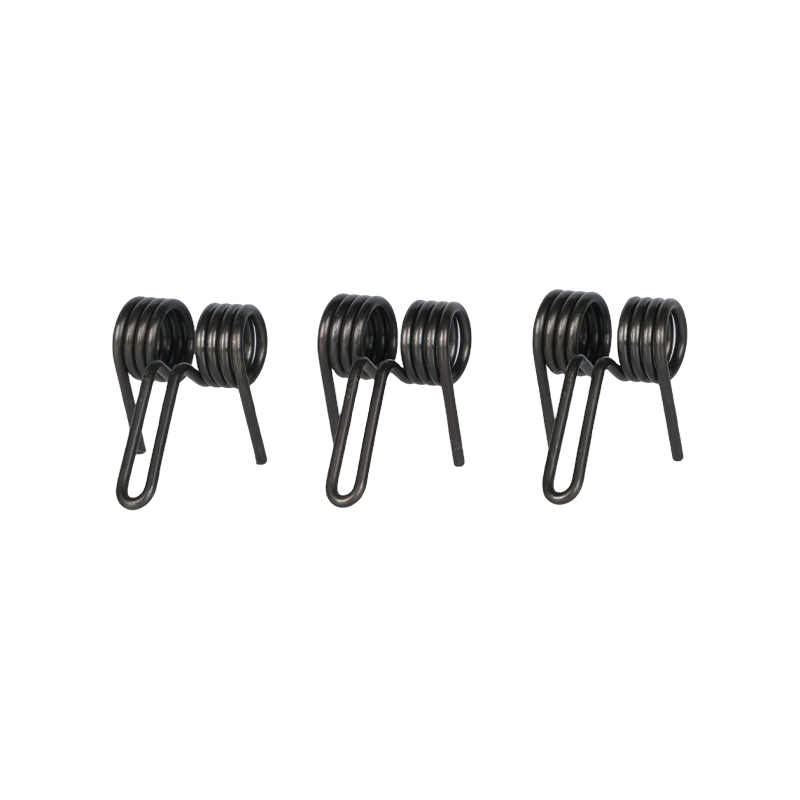
Dual Coil Torsion Spring for Automotive Interior Components
A compact variant for small hinges and damper-assisted covers — cup holder flaps, sunglass holders and storage bin lids — where space behind the trim is tight and torque has to stay flat across the travel.
Range, Material and Application Matrix
| Series | Form and material | Typical interior application | Configuration variables |
|---|---|---|---|
| Spring clip nut | Carbon steel strip, formed thread | Door cards, pillar trims, garnish mouldings | Flange thickness, thread size, leg span, finish |
| Double spring clip nut | Carbon steel strip, twin spring legs | Quarter trim, long panels, load-bearing trim | Grip range, insertion force, leg geometry |
| Dual coil torsion spring | Carbon spring steel wire, two coils | Armrest lids, glovebox doors, console covers | Wire diameter, free angle, torque at working angle |
| Compact dual coil spring | Spring steel wire, reduced coil envelope | Cup holder flaps, storage lids, small hinges | Coil diameter, leg end form, travel angle |
Application Fit Across Interior Trim Systems
Clipping and springing behave differently in each trim zone, so we size the part to the assembly, not only to the screw.
- Door trim and pillar: clip nuts on the substrate flange, with clip spacing matched to panel stiffness so the edge stays flush.
- Floor console and armrest: torsion springs for lid counterbalance, clip nuts for console side panels and end caps.
- Glovebox and storage bins: low-rate dual coil springs for a controlled slow-open feel with damper assistance.
- Seat side shields and trim covers: clips that hold the panel without loading the foam or the seat frame.
Materials, Heat Treatment and Surface Finish
Clips are formed from carbon steel strip and springs from carbon spring steel wire; grade, thickness and hardness follow the drawing and the load target. Heat treatment runs in-house for stress relief and hardness, and our finishing line covers trivalent zinc plating rated to 480 hours salt spray and zinc-nickel alloy plating rated to 480–720 hours.
- Wire and strip selected to the drawing's grade, diameter range and hardness window.
- Stress relief after forming to hold free length and torque during storage.
- Trivalent zinc plating for standard interior corrosion classes.
- Zinc-nickel alloy plating where trim sits near a sill, handle or moisture path.
- Coating build kept clear of thread engagement and clip contact faces.
Tolerances, Load and Repeatability
Across our automotive fastener programmes we work within a 0.06 mm to 0.30 mm tolerance envelope, applied to the feature that actually controls function — coil inner diameter, leg position or grip span — rather than spread evenly over the drawing. Strength development for our nut programmes runs from class 5/8 through class 12, with class 13–14 ultra-high-strength work in pre-research.
- Free angle and torque measured at the working angle, not only at free state.
- Retention force verified against the panel thickness extremes of the tolerance band.
- Bend radii and grain direction set so clip legs do not crack on repeated insertion.
- Hardness checked after heat treatment on each production lot.
Configuration Choices Before Production
- Wire or strip thickness, material grade and hardness range.
- Coil count, coil diameter, leg length and end form — straight, hooked or angled.
- Free angle, torque at the working angle and allowable torque loss after cycling.
- Clip grip range, insertion chamfer and flange thickness coverage.
- Thread size and type, including thread-forming engagement.
- Plating system and corrosion class matched to the adjacent trim material.
Assembly Integration and Installation
Clips are shaped to seat by hand or push tool without permanent set of the legs, and to release at a controlled force during service. For automated lines we consider feed orientation, nesting and part separation so the clip or spring arrives at the tool the right way round. Where a trim fixing uses a thread-forming nut, our MAT thread design corrects a slight off-axis start and guides the screw back into the thread path during powered driving.
Quality Control and Acceptance
Xinye holds IATF 16949-2016 certification, with documented work instructions for special and critical processes. Control starts with raw material analysis, continues through forming, heat treatment and finishing, and closes with mechanical performance testing of the finished part.
- Dimensional check of grip span, free angle, coil diameter and thread.
- Load or torque test at the specified working point.
- Hardness and plating thickness verification on heat-treated and coated lots.
- Visual inspection at bend radii and thread entries for cracks or laps.
Information We Use to Configure Your Solution
A trim clip or spring is only correct when the panel, the load and the line are known together. These are the inputs that let us return a workable configuration and quotation.
| Project input | What we need from you | How it changes the part |
|---|---|---|
| Panel interface | Flange thickness range or hole diameter with tolerance | Sets grip range, leg span and insertion force |
| Retention or torque target | Pull-out force in N, or torque at the working angle | Defines wire or strip thickness, coil count and heat treatment |
| Material and finish | Steel grade, corrosion class, adjacent trim material | Selects wire grade and plating system |
| Service environment | Temperature range, humidity, cleaning agents | Drives coating choice and stress relief |
| Assembly method | Manual, hand tool or automated feed | Controls orientation, chamfers and part separation |
| Volume and packaging | Annual volume, release pattern, pack format | Sets tooling plan and packing that protects spring legs |
Questions from Trim and Fastener Engineers
What interior trim circlips and springs does Xinye manufacture?
We produce carbon steel spring clip nuts in single and double leg versions, and dual coil torsion springs for interior hinges, lids and flaps. All four series are formed, heat treated where required and finished in our Jiaxing plant.
Can you build spring clip nuts to our drawing instead of a standard size?
Yes. Grip span, leg form, thread size, strip thickness and plating are all set from your drawing or from a sample plus the panel interface data. We confirm the controlling dimensions before tooling starts.
How do you keep clip retention and spring torque consistent between lots?
Material grade and hardness are fixed at the start, stress relief follows forming, and each lot is checked for grip span, free angle, torque at the working angle, hardness and plating thickness. Finished-part mechanical testing closes the loop.
Which plating should we specify for interior trim parts?
Trivalent zinc at 480 hours salt spray covers most cabin trim. Where the fixing sits near a sill, handle or condensation path, zinc-nickel alloy at 480–720 hours gives more margin. We match the choice to the adjacent trim material and the corrosion class on the drawing.
What do you need to quote a new interior clip or spring?
Send the drawing or 3D data, the panel thickness or hole tolerance, the retention force or torque target, the material and finish, the assembly method, and the annual volume with release pattern. With those we can propose a configuration, tooling route and pack format.
Can the same spring be tuned for a lighter or heavier lid?
Wire diameter, coil count and leg angle are adjusted to move torque without changing the hinge envelope, which keeps one housing design across a console or glovebox family. We test the resulting torque curve across the full travel angle.
- Contact Us
-
-
861260628@qq.com

zj@xy-nuts.com -
+86 15888350558

-
No.350 Jingyi Road, Jiaxing Port Area, Zhejiang Province, China.

-
- Quick Links
- Products
- About Us
- Capabilities
- Service
- News
- Contact Us
- Product
- Nuts
- CNC Machined Components, Sleeves & Pins
- Specialty & Functional Automotive Components
- Metal Stampings
- Bolts & Screws
- Mobile
Copyright ©
Zhejiangxinye Automobile Technology Co. , Ltd.
All Rights Reserved
Custom
Interior Trim Circlips & Springs Suppliers
