

 Español
 عربى
product
product
product
product
product
product
product
product
product
product
product
product
product
product
product
product

Product Category
Contact us
Sealed Nuts for EV Battery Pack Suppliers
Message Feedback
About Us
30 Years of Expertise in Automotive Fasteners
Zhejiangxinye Automobile Technology Co. , Ltd. traces its origins to 1995, evolving from Jiaxing Zhapu Xinye Standard Parts Co., Ltd. We are China Sealed Nuts for EV Battery Pack Suppliers and Custom
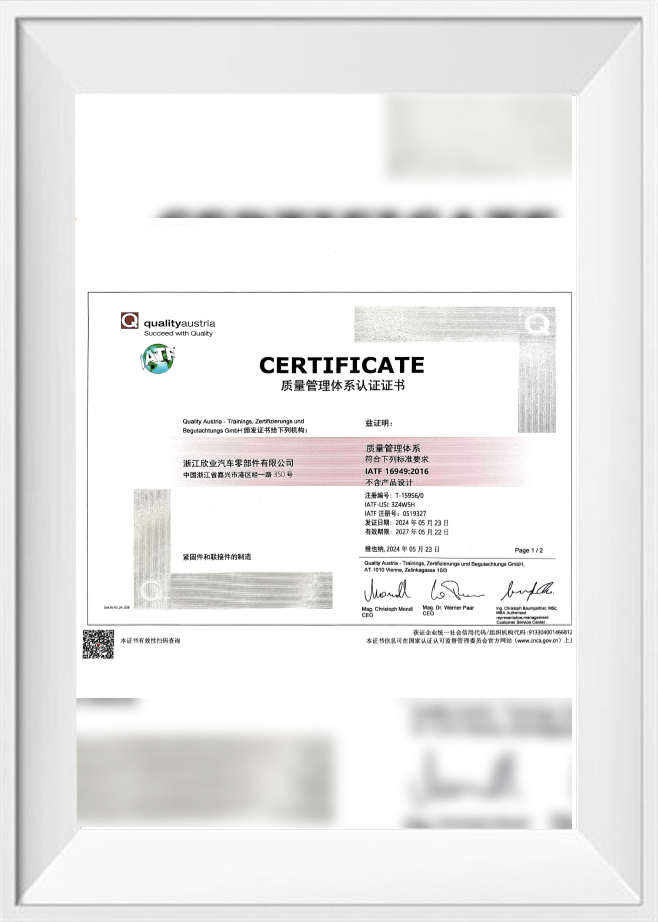
Sealed Nuts for EV Battery Pack factory. The company specializes in the production of various automotive fasteners and stamping parts, including flange nuts, welding nuts, and more. For over 30 years, Xinye has kept pace with industry trends, focusing on technological innovation and internal management, and has achieved steady growth. The company is now certified to IATF 16949-2016.
Adhering to the principle of "surviving by product quality, developing by technological innovation," Xinye takes quality as its foundation and customer satisfaction as a top priority, committed to providing suitable and reliable products. To enhance product competitiveness and strengthen employee quality awareness, the company has established a sound management system and standardized process flows. Work instructions have been developed for special and critical processes, and strict quality inspections are conducted at every step. From raw material analysis to finished product mechanical performance testing, process control is implemented to ensure product conformity. The continuously improving quality management system and stable product performance have earned the company market recognition, as well as customer trust and praise.
Adhering to the principle of "surviving by product quality, developing by technological innovation," Xinye takes quality as its foundation and customer satisfaction as a top priority, committed to providing suitable and reliable products. To enhance product competitiveness and strengthen employee quality awareness, the company has established a sound management system and standardized process flows. Work instructions have been developed for special and critical processes, and strict quality inspections are conducted at every step. From raw material analysis to finished product mechanical performance testing, process control is implemented to ensure product conformity. The continuously improving quality management system and stable product performance have earned the company market recognition, as well as customer trust and praise.
-
0m2
Factory Area
-
0
Brand Origin
-
0+
Product Range


Zhejiangxinye Automobile Technology Co. , Ltd.
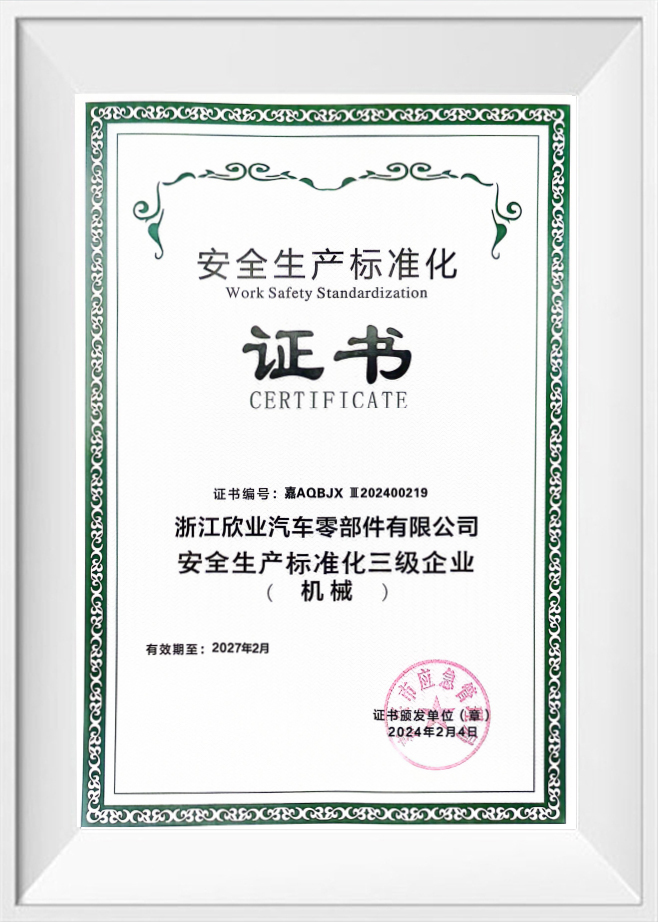
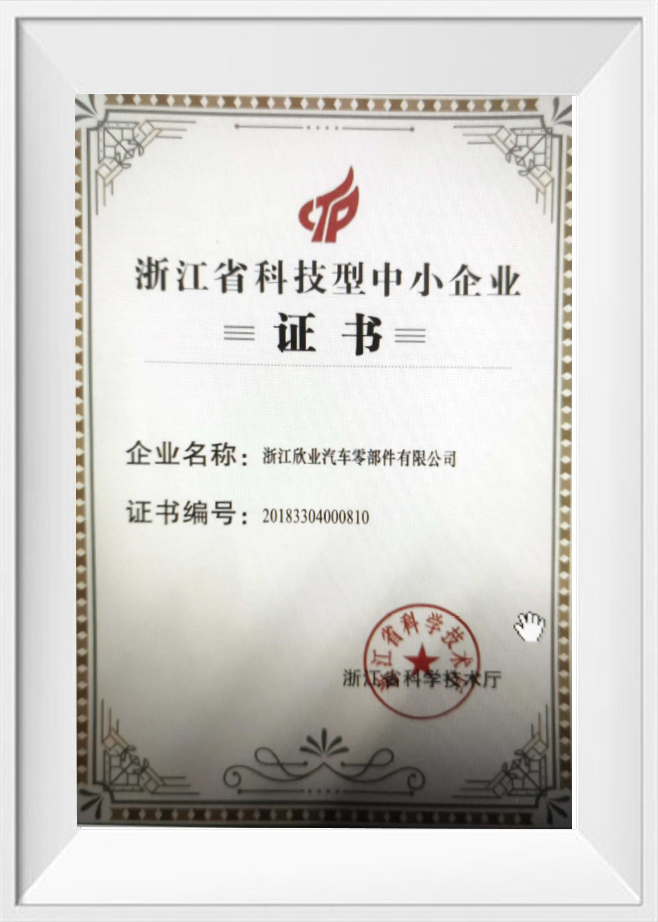
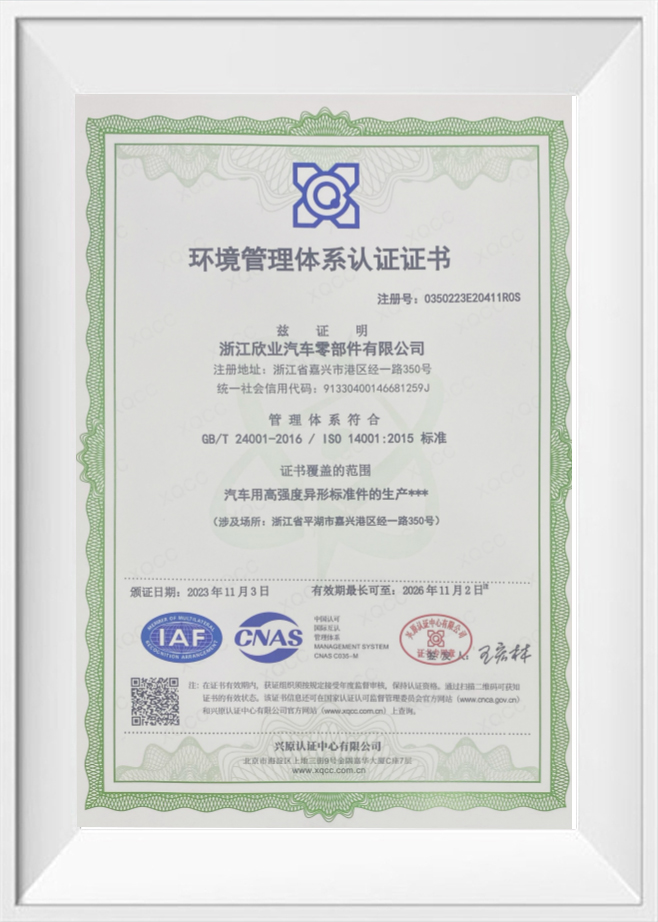
Certificate Of Honor
What’s News
Industry Insights & Updates
View All News
-
2026-11-03Industry News
-
2026-11-03Industry News
-
2026-11-03Industry News
Sealed Nuts for EV Battery Pack Industry Knowledge
Zhejiangxinye Automobile Technology Co., Ltd. manufactures sealed nuts for EV battery pack assembly at our plant on No.350 Jingyi Road, Jiaxing Port Area, Zhejiang, China. The range covers flanged blind closed-end waterproof nuts, three-spot weld blind nuts, single locating tab variants and smooth flanged weld nuts, all built around one job: keeping the thread clean, dry and dimensionally stable after welding, e-coating and vehicle-level water exposure.
Xinye has produced automotive fasteners and stamping parts since 1995 and is certified to IATF 16949-2016. Our role as Custom Sealed Nuts for EV Battery Pack Suppliers, Exporter draws on the same cold heading, tapping, heat treatment and thread rolling lines that produce more than 500 fastener varieties, with in-house processing from raw material analysis to finished mechanical performance testing.
Sealed Nut Types We Manufacture for Battery Pack Builds
Each type in the range solves a different interface problem: how the nut is fixed to the tray or housing sheet, how it is indexed during welding, and how the closed end protects the thread afterwards.
| Nut type | Attachment and locating feature | Sealing construction | Typical battery-pack fit |
|---|---|---|---|
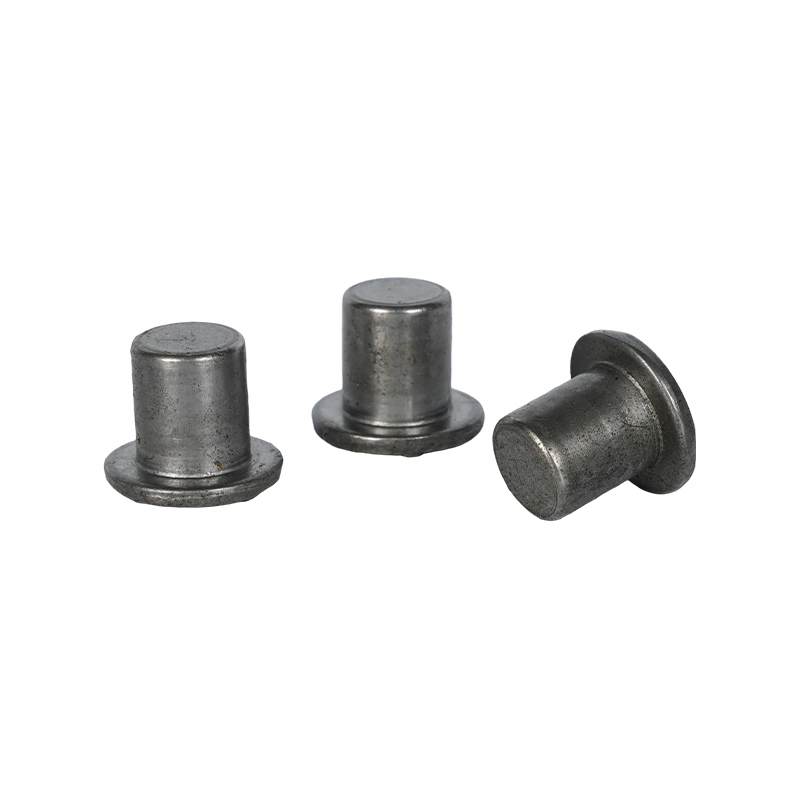
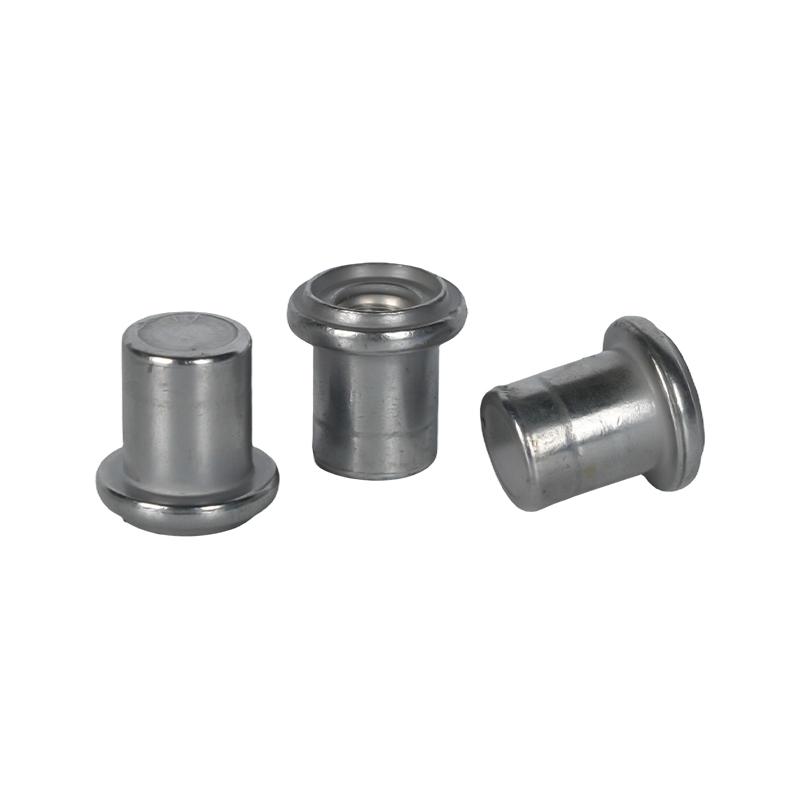
| Flanged Blind Closed End Waterproof Nut | Flanged body, closed dome, no through-bore | Closed end blocks water and dust from the bolt side | Cover and lid fixings, service access points, bracket mounting |
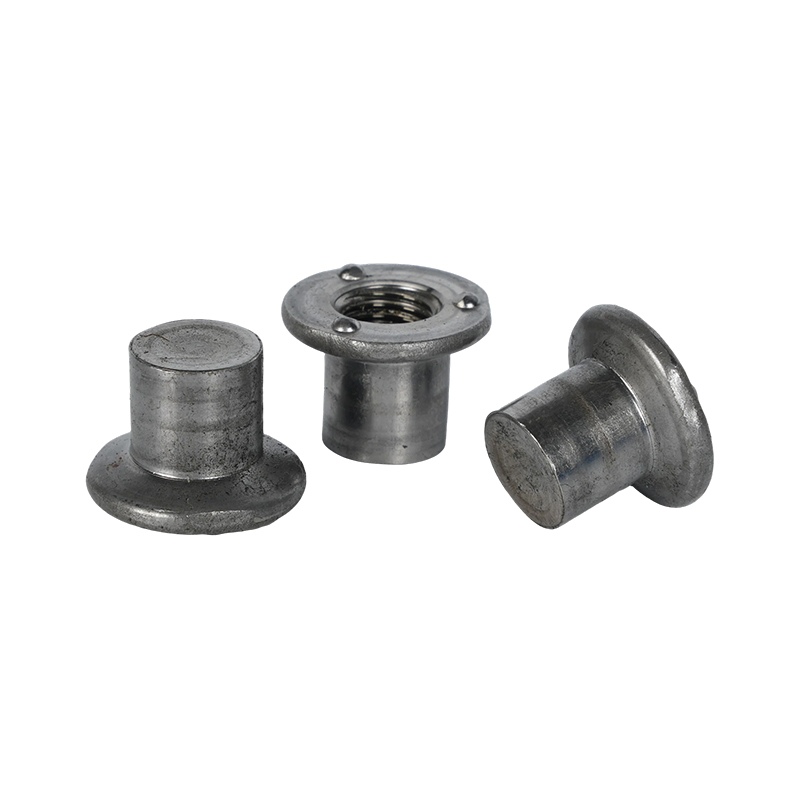
| Carbon Steel 3 Spot Weld Blind Nut, Flanged Closed End Waterproof Weld Nut | Three weld projections on the flange face | Closed end keeps weld spatter and e-coat out of the thread | Tray, housing and body-side panels joined by projection welding |
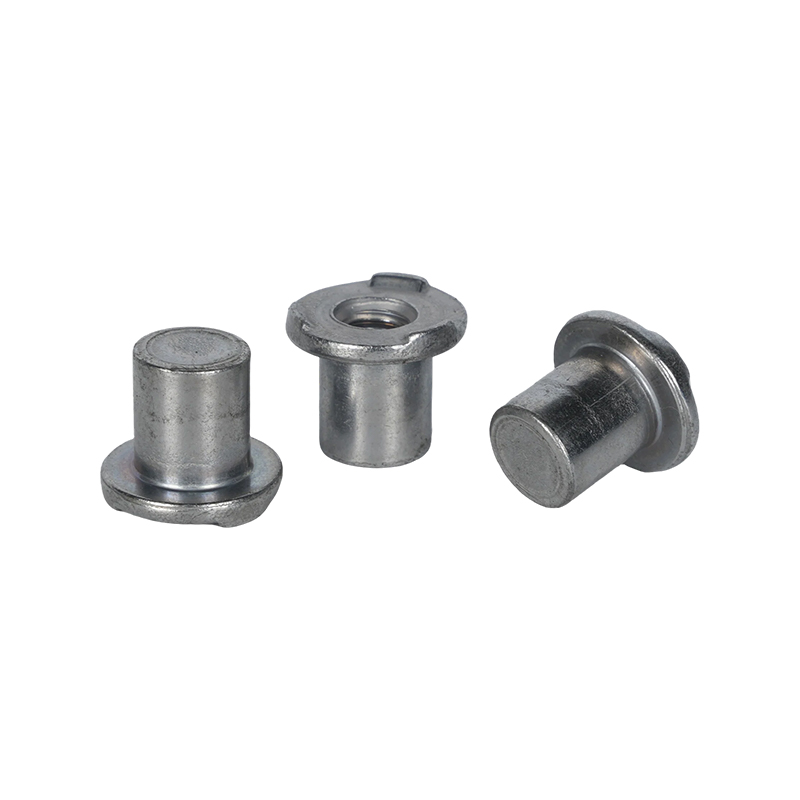
| Carbon Steel Single Locating Tab Flanged Blind Closed End Nut | Single locating tab for angular indexing | Closed dome plus tab-controlled orientation in the fixture | Positions where the nut must sit at a fixed angle around a hole |
| Smooth Flanged Blind Closed End Weld Nut | Smooth flange face without projection pattern | Closed end with a flat seating face | Thin-wall covers and flat mating faces where projection height is critical |
Related nut families from the same production system are available where a pack design calls for a different fixing principle, including weld nuts with an open body and standard flange nuts for general chassis and bracket work.
Application Fit Inside the Traction Battery Assembly
Sealed nuts belong at every threaded joint that passes through a pack boundary or sits in a wet zone: tray-to-body connections, housing covers, module frame brackets, busbar and HV cover fixings, and underbody shields that see spray and road water. The closed end is what separates these parts from a standard flange nut — there is no open thread path for water, dust or cleaning fluid to travel through.
- Thread protection through the paint line: the closed dome stops e-coat, primer and pre-treatment fluid entering the thread, so rundown torque stays consistent after the body or tray is painted.
- Weld-side cleanliness: spatter from projection welding cannot reach the internal thread.
- Service access: blind nuts allow a sealed fixing where the rear face of the panel is unreachable or must remain closed.
- Locating control: the tab or projection pattern fixes the part angle, which matters where a nut runner approaches from one direction only.
Material, Strength Class and Surface Protection
Our sealed nut range is produced in carbon steel, with the grade selected against the strength class and the weldability of the mating sheet. Fastener development at Xinye covers classes up to Class 12, with ultra-high-strength work at Classes 13–14, so a pack joint can carry the axial load margin the design requires rather than the lightest standard grade available.
- Base material: carbon steel to drawing, matched to the bolt class and the welded panel.
- Thread technology: the MAT self-correcting thread form, with a guiding lead on the first threads, is available for automated rundown where bolt-to-nut alignment is not perfect.
- Corrosion protection: trivalent zinc plating at 480 h salt spray and Zn-Ni alloy plating at 480–720 h salt spray, both run on our in-house surface finishing line.
- Dimensional control: tolerance combinations held between 0.06 mm and 0.30 mm depending on the feature and its function in the joint.
- Heat treatment and hardness: in-house heat treatment lines with hardness testing used to confirm property class before release.
Thread, Flange and Sealing Configuration
Sealed nuts are configured from the joint outward, so the drawing drives tooling rather than the other way round. We cold head the body, roll or tap the thread, form the closed end and add the weld or locating feature in one controlled sequence.
- Thread size and pitch, class of fit, and usable thread depth in the closed-end body
- Flange diameter and thickness, hex across-flats or round body, chamfer and edge break
- Closed-end dome height and wall thickness, set so the bolt end cannot break through under full engagement
- Weld projection count, height, diameter and pitch circle — three-spot pattern as standard for the weld variant
- Locating tab position in degrees, tab width and length for fixture orientation
- Coating type, coating thickness and lot marking for traceability
- Bulk cartons, layered trays or customer-specified dunnage for automated feeding
Non-standard bodies, mixed flange geometries and drawing-specific thread lengths are handled through our custom fastener engineering route rather than being forced into a catalogue size.
Welding and Assembly Line Integration
Projection weld nuts only perform when the projections, the sheet thickness and the weld schedule are treated as one system. We confirm the sheet grade and thickness at the weld interface before fixing projection geometry, then run the part on your fixture so electrode access and flange seating are proven before series release.
- Projection height and spacing set against panel thickness to avoid marking the visible side
- Locating tab or projection pattern that resists rotation during powered rundown
- Thread lead geometry and MAT thread option for multi-spindle nut runners and robotic stations
- Torque and clamp load confirmed against the mating bolt class, not in isolation
- Sample lots and pilot quantities for weld and rundown trials before volume call-off
Quality Control and Acceptance
Xinye operates under IATF 16949-2016, with a documented management system, standardized process flows and written work instructions for special and critical processes. Inspection runs from raw material analysis through in-process checks to finished mechanical performance testing, supported by environmental management system certification and work safety standardization.
| Acceptance area | What is checked |
|---|---|
| Material | Raw material analysis and grade confirmation against the drawing |
| Thread | Gauge inspection of size, pitch, class of fit and usable depth |
| Mechanical performance | Hardness testing and finished-part performance testing to the specified class |
| Geometry | Flange dimensions, closed-end depth, tab angle, projection pattern |
| Coating | Plating type and thickness, salt spray performance against the agreed target |
Information We Use to Configure Your Solution
A sealed nut quotation is only useful when it matches the joint, the welding process and the volume plan. We build the configuration from the inputs below and return a drawing-specific proposal with material, coating, inspection scope and packaging defined.
| Project input | Why it changes the part |
|---|---|
| 2D drawing or 3D model | Defines thread, flange, dome depth, tab angle and projection geometry for tooling |
| Panel material and thickness at the weld interface | Sets weldability, projection height and flange support |
| Mating bolt class, torque and clamp load | Fixes base material grade, property class and heat treatment |
| Corrosion and salt spray target | Selects trivalent zinc or Zn-Ni plating and coating thickness |
| Sealing requirement and test method | Drives closed-end wall thickness, flange flatness and seating control |
| Annual volume and call-off pattern | Plans cold-heading tooling, lot size and repeat production |
| Assembly method and tooling | Confirms thread lead, MAT thread option and rundown compatibility |
| Marking, packaging and acceptance criteria | Sets lot traceability, dunnage and the inspection plan released with the order |
Questions Procurement and Engineering Teams Ask Us
What makes a sealed nut different from a standard flange nut?
The body is closed at one end, so there is no open thread path through the part. On a battery pack this keeps water, dust, pre-treatment fluid, e-coat and weld spatter out of the internal thread, and allows a sealed fixing where the rear face of the panel cannot be reached.
Which variant should be used for a welded tray or housing joint?
The three-spot weld blind nut is the standard choice for projection welding to a tray, housing or body-side panel. Where the nut must sit at a fixed angle in the fixture, the single locating tab version gives angular indexing. The smooth flanged version is used where the seating face must stay flat and projection height is not acceptable.
What thread sizes and strength classes can Xinye produce?
Sealed nuts are produced to the thread size, pitch and class of fit on the drawing, in carbon steel grades matched to the mating bolt class. Fastener development covers classes up to Class 12, with Classes 13–14 at pre-research stage for higher-load joints. Send the thread specification together with the bolt class so material and heat treatment are fixed together.
How is corrosion performance specified?
Trivalent zinc plating is run to 480 h salt spray, and Zn-Ni alloy plating to 480–720 h, both on our in-house surface finishing line. The plating type, thickness and salt spray target are agreed at quotation so the coating matches the pack environment and the vehicle life requirement.
Can you supply a non-standard body or flange geometry?
Yes. Cold heading, tapping, thread rolling and heat treatment are carried out in-house, which allows drawing-specific flange shapes, dome depths, tab positions and projection patterns to be tooled as custom parts. A sample lot is produced for weld and rundown trials before series supply.
What documentation accompanies a production order?
Production runs under IATF 16949-2016 with raw material analysis, in-process inspection and finished mechanical performance testing. The inspection plan released with the order covers the characteristics agreed on the drawing, including thread gauging, hardness, coating and geometry, and lot marking follows the traceability requirement you specify.
- Contact Us
-
-
861260628@qq.com

zj@xy-nuts.com -
+86 15888350558

-
No.350 Jingyi Road, Jiaxing Port Area, Zhejiang Province, China.

-
- Quick Links
- Products
- About Us
- Capabilities
- Service
- News
- Contact Us
- Product
- Nuts
- CNC Machined Components, Sleeves & Pins
- Specialty & Functional Automotive Components
- Metal Stampings
- Bolts & Screws
- Mobile
Copyright ©
Zhejiangxinye Automobile Technology Co. , Ltd.
All Rights Reserved
Custom
Sealed Nuts for EV Battery Pack Suppliers
