

 Español
 عربى
product
product
product
product
product
product
product
product
product
product
product
product
product
product
product
product

Product Category
Contact us
Message Feedback
About Us
30 Years of Expertise in Automotive Fasteners
Zhejiangxinye Automobile Technology Co. , Ltd. traces its origins to 1995, evolving from Jiaxing Zhapu Xinye Standard Parts Co., Ltd. We are China Non-Standard Nuts Suppliers and Custom
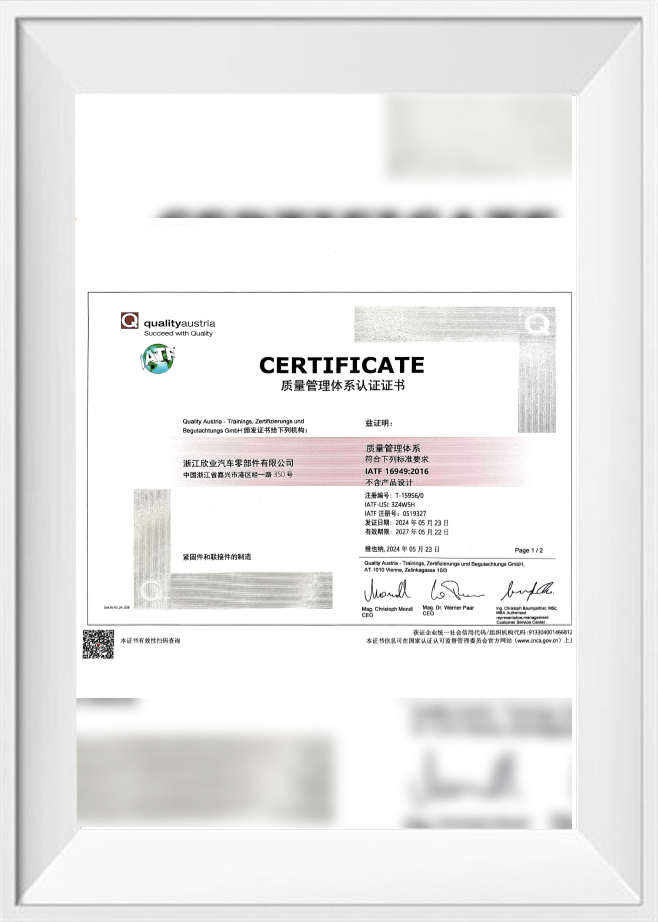
Non-Standard Nuts factory. The company specializes in the production of various automotive fasteners and stamping parts, including flange nuts, welding nuts, and more. For over 30 years, Xinye has kept pace with industry trends, focusing on technological innovation and internal management, and has achieved steady growth. The company is now certified to IATF 16949-2016.
Adhering to the principle of "surviving by product quality, developing by technological innovation," Xinye takes quality as its foundation and customer satisfaction as a top priority, committed to providing suitable and reliable products. To enhance product competitiveness and strengthen employee quality awareness, the company has established a sound management system and standardized process flows. Work instructions have been developed for special and critical processes, and strict quality inspections are conducted at every step. From raw material analysis to finished product mechanical performance testing, process control is implemented to ensure product conformity. The continuously improving quality management system and stable product performance have earned the company market recognition, as well as customer trust and praise.
Adhering to the principle of "surviving by product quality, developing by technological innovation," Xinye takes quality as its foundation and customer satisfaction as a top priority, committed to providing suitable and reliable products. To enhance product competitiveness and strengthen employee quality awareness, the company has established a sound management system and standardized process flows. Work instructions have been developed for special and critical processes, and strict quality inspections are conducted at every step. From raw material analysis to finished product mechanical performance testing, process control is implemented to ensure product conformity. The continuously improving quality management system and stable product performance have earned the company market recognition, as well as customer trust and praise.
-
0m2
Factory Area
-
0
Brand Origin
-
0+
Product Range


Zhejiangxinye Automobile Technology Co. , Ltd.
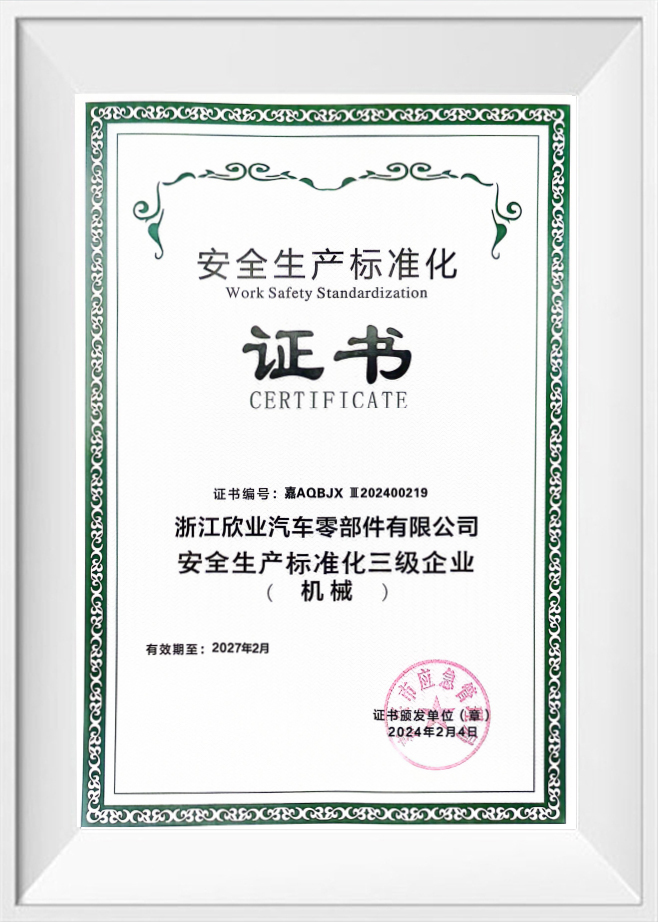
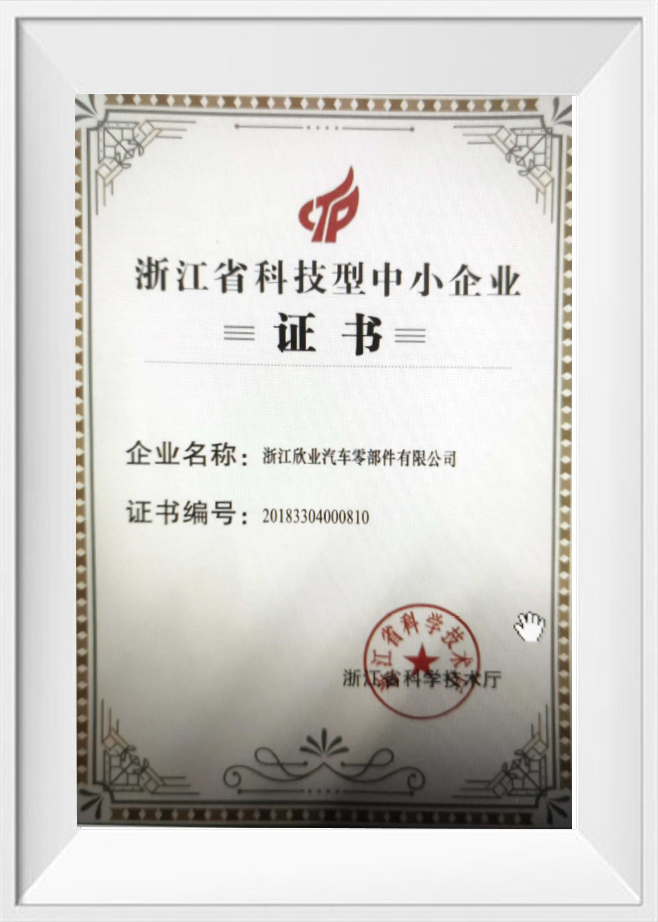
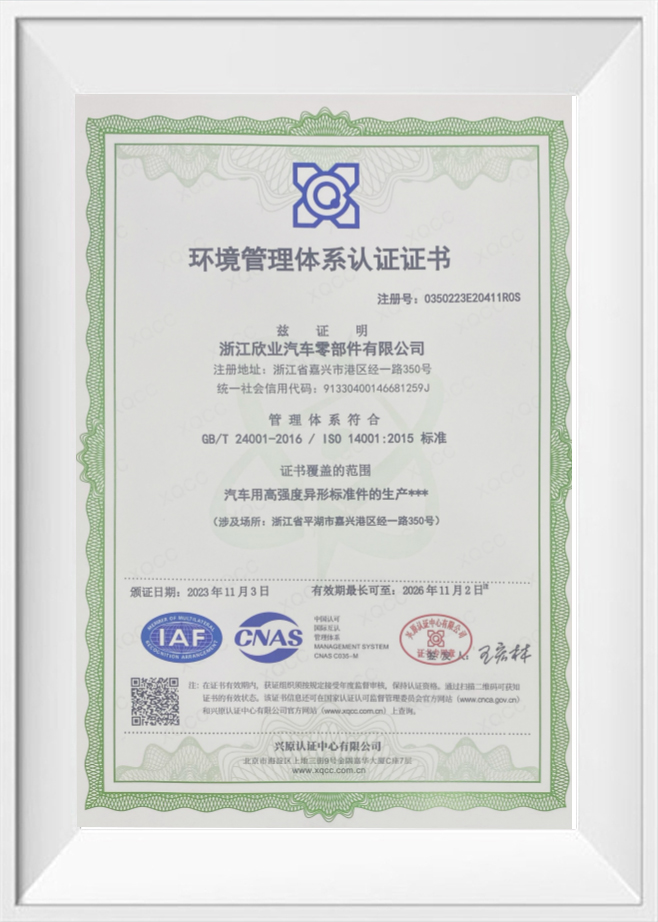
Certificate Of Honor
What’s News
Industry Insights & Updates
View All News
-
2026-11-03Industry News
-
2026-11-03Industry News
-
2026-11-03Industry News
Non-Standard Nuts Industry Knowledge
Custom Non-Standard Nuts Made to Drawing
Zhejiangxinye Automobile Technology Co., Ltd. manufactures custom non-standard nuts for automotive and industrial assemblies, produced from customer drawings, 3D models or matched samples rather than from a catalogue. Since 1995 we have built fasteners and stamping parts in-house, from raw material analysis through cold heading, tapping, heat treatment and mechanical performance testing, and we are certified to IATF 16949-2016.
As Custom Non-Standard Nuts Suppliers, Exporter, our work starts with the mating part: the panel thickness, plastic boss, thread engagement and torque path decide the flange size, knurl, shoulder length and property class we propose.
- Over 30 years of fastener production and more than 500 product varieties across the programme
- Strength development from Class 5/8 to Class 12, with Class 13–14 ultra-high-strength nuts in pre-research
- Tolerance combinations held across a 0.06 mm to 0.30 mm band
- In-house cold heading, tapping, heat treatment, thread rolling and hardness testing
Our Non-Standard Nut Range
The published non-standard range covers four geometries, each answering a specific assembly problem. Related nut families — knurled, clinch, sliding, weld, self-locking and slotted — are produced on the same lines when a project needs a combination of functions in one part.
| Non-standard nut | Function in the assembly | Configuration points |
|---|---|---|
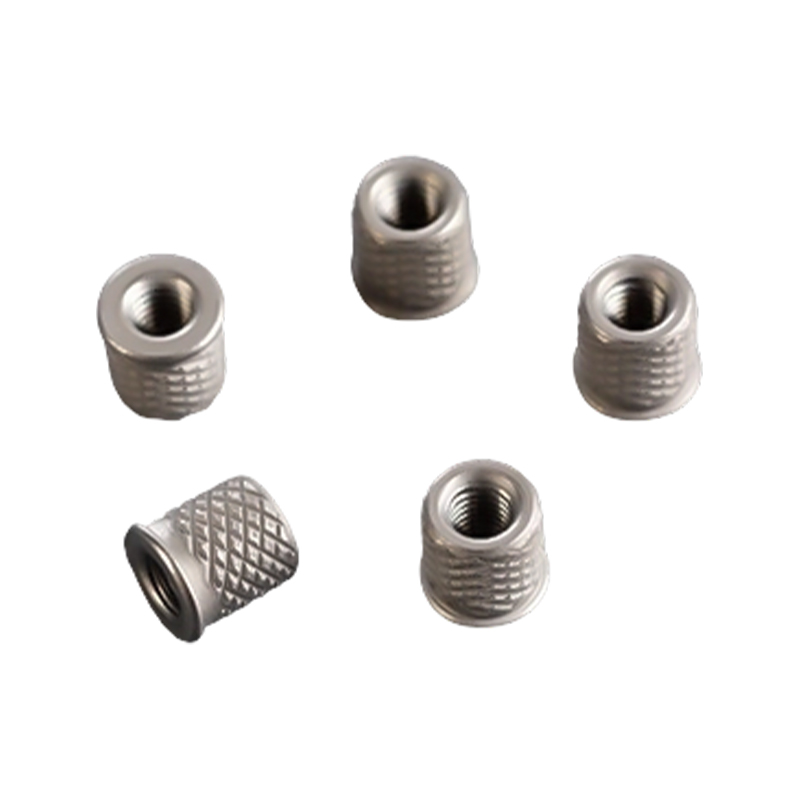
| Stainless Steel Flanged Diamond Knurl Cylindrical Insert Nut | Pressed into plastic or a bored housing; the diamond knurl resists torque-out under driving load | Body diameter, knurl pattern, flange diameter and thickness, thread size and pitch, stainless grade, passivation |
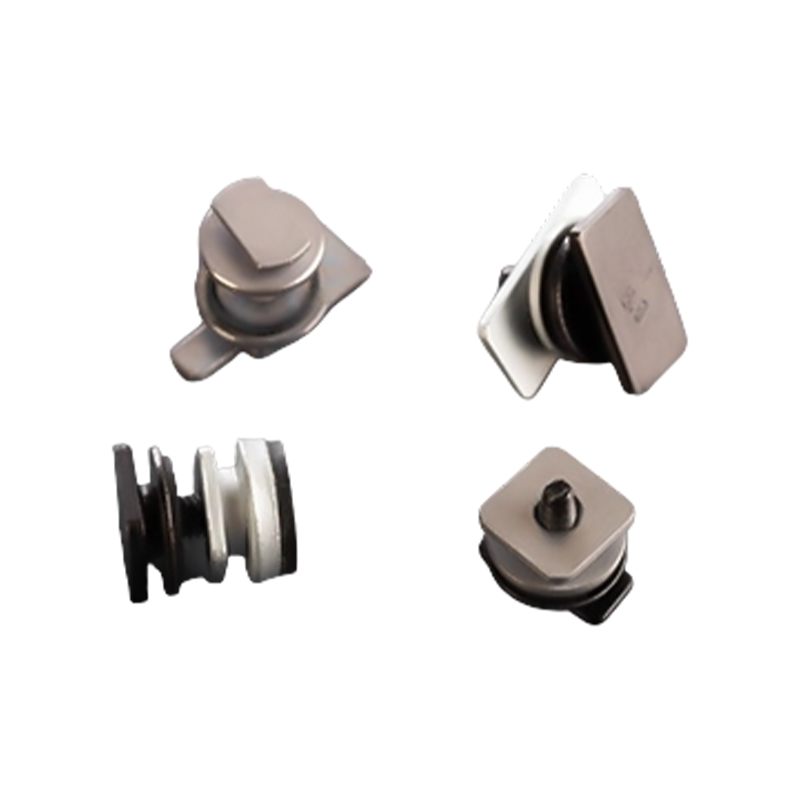
| Clip Type Floating Combined Nut | Snaps into sheet metal or a bracket; the floating thread takes up build tolerance during automated driving | Clip thickness range, float allowance, thread spec, retention force, coating system |
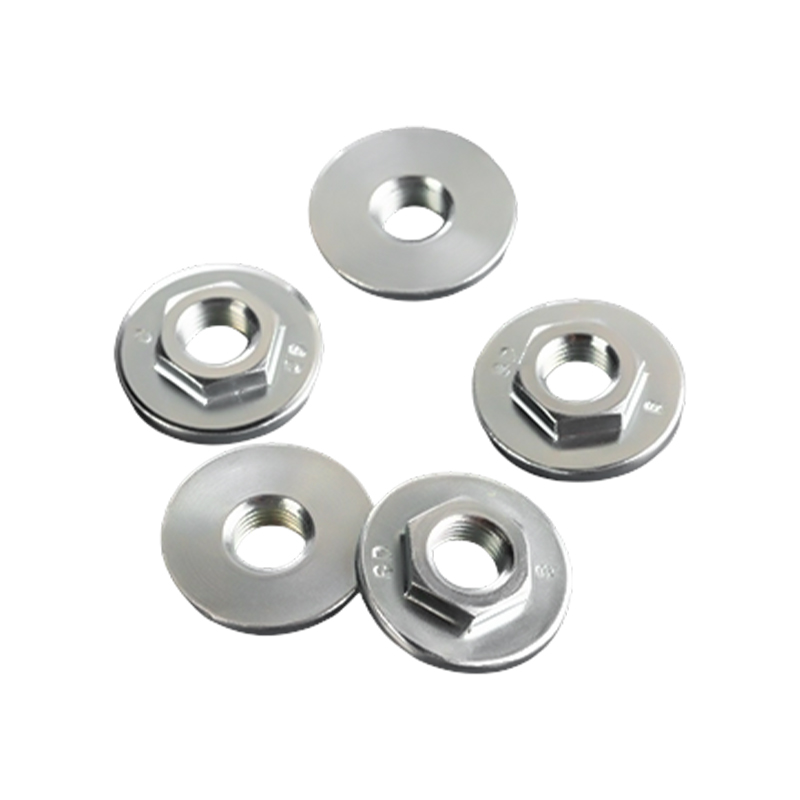
| Hex Nut with Extra Large Flange | Spreads clamp load on soft, thin or slotted panels where a standard flange would deform the surface | Across-flats, flange diameter, overall height, property class, thread class, plating |
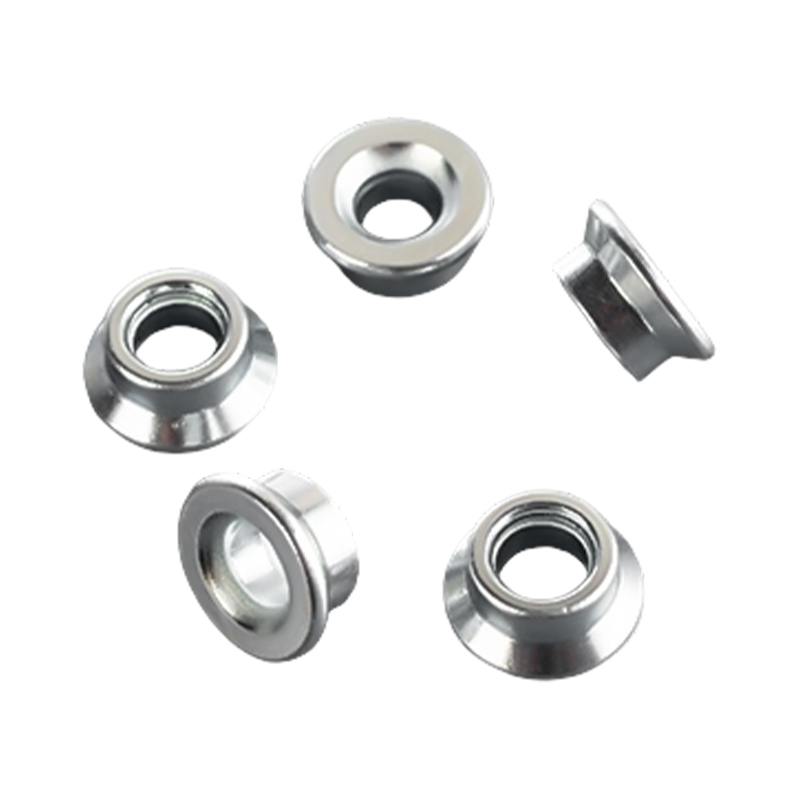
| Flanged Shoulder Threaded Spacer | Fixes a stack height between two components and provides a defined bearing face | Shoulder diameter and length, through or blind thread, flange geometry, material, surface finish |
Where a printed nut cannot meet the load case, we machine the same function from bar stock and combine it with our CNC turning and stamping capacity, so clip, sleeve and spacer features can be produced as one part.
Where Non-Standard Nuts Fit
Non-standard nuts are used where a standard hex or flange nut cannot reach the joint, cannot be retained, or cannot carry the load without damaging the surrounding material.
- Interior and trim assemblies — knurled insert nuts moulded or pressed into plastic, with flange depth set by the boss height.
- Body and bracket joints — clip and floating nuts in sheet metal, plus clinch nuts where a permanent load-bearing thread is needed in a panel.
- Seat structures and adjustment mechanisms — threaded spacers, shims and shoulder nuts that set positional height and travel.
- Suspension and chassis mounting — flanged step and shoulder geometries with high clamp load and controlled bearing area.
- EV battery enclosures — sealed and flanged forms that protect the sealing interface from thread torque.
- Exhaust and engine periphery — nuts built for elevated temperature service with defined strength retention.
Critical Specifications We Work To
Each drawing is reviewed against the joint it serves. The values below are the parameters we confirm before a non-standard nut enters production.
| Parameter | Scope we work within | What it controls |
|---|---|---|
| Property class | Class 5/8 through Class 12 in current production; Class 13–14 in pre-research | Axial load capacity and behaviour in heavy-duty or high-performance joints |
| Dimensional tolerance | 0.06 mm to 0.30 mm, selected per feature | Press fit, float, shoulder height and thread alignment |
| Corrosion protection | Trivalent zinc plating at 480 h salt spray; Zn-Ni alloy plating at 480–720 h salt spray | Service life in underbody, exposed and humid environments |
| Temperature grade | Three grades at 300 °C, 550 °C and 650–700 °C | Stable performance in exhaust systems and engine-periphery assemblies |
| Thread form | Metric and unified threads, standard or modified entry, optional MAT self-correcting thread | Engagement length, cross-threading risk and drive torque |
Materials and Surface Performance
Carbon steel, alloy steel and stainless steel grades are selected against the strength class, the mating material and the corrosion exposure of the joint. Surface finishing is developed in-house, which allows plating thickness and friction behaviour to be matched to the torque specification rather than taken from a general table.
For plastic assemblies we use knurled nuts with diamond or straight knurl patterns, choosing flange diameter and knurl depth to suit wall thickness and pull-out load.
Thread Design and Assembly Behaviour
A non-standard nut usually solves an assembly-line problem as much as a mechanical one. Our MAT thread nut carries a self-correcting function on its first threads: if the bolt and nut are slightly misaligned during automated driving, the entry guides the bolt back onto the correct thread path. That reduces stall time on automated stations without changing the specified clamp load.
- Floating clip designs absorb positional tolerance between welded brackets and driven screws.
- Flange geometry distributes bearing stress where panels are thin, soft or slotted.
- Shoulder and spacer forms lock stack height so torque is not converted into panel compression.
Production and Quality Control
Production is completed in-house from raw material to finished goods. Work instructions are issued for special and critical processes, and inspection is applied at each step rather than only at final sorting.
Our process chain includes automatic cold heading machines, tapping machines, heat treatment lines, thread rolling equipment and hardness testers. Raw material analysis, in-process dimensional checks and finished-part mechanical performance testing are carried out under our IATF 16949-2016 quality management system, alongside the work safety standardization and environmental management system certifications held by the company.
Acceptance criteria are agreed per part: critical dimensions against the drawing, thread fit by gauge, hardness and mechanical properties, coating thickness and salt-spray duration, plus any functional check that reproduces the customer's assembly condition.
Information We Use to Configure Your Solution
A non-standard nut is only as good as the data behind it. The following inputs let us propose a drawing that can be produced, assembled and inspected without later changes.
- Drawing, 3D model or a physical sample with the critical features marked
- Mating bolt or screw: thread size, pitch, class of fit and engagement length
- Mating component: panel thickness, plastic boss dimensions, bore diameter or bracket geometry
- Required property class, drive torque and clamp load
- Service environment: corrosion exposure, operating temperature and contact materials
- Assembly method — robotic driving, manual tooling, press fit or welding — and the target cycle time
- Annual volume and order pattern, so tooling and process route match the programme
- Inspection, documentation and packaging requirements to be applied at shipment
Documentation, Packaging and Delivery Scope
Each order is confirmed with its own scope: drawing revision, material grade, surface system, inspection items, packaging format and labelling. Because parts are produced in-house, drawing changes, tooling adjustments and repeat orders are handled inside the same process chain, with the approved sample kept as the reference for subsequent production runs.
Frequently Asked Questions
What makes a nut non-standard in your range?
A nut is non-standard when its geometry departs from a published standard in a way the joint requires: an enlarged flange, a knurled press-fit body, a floating clip, a defined shoulder height, or a modified thread entry. The thread itself may still be a standard metric or unified size, but the body, bearing face and installation feature are built to the customer drawing.
Can you produce from a sample instead of a drawing?
Yes. A sample can be measured and converted into a controlled drawing with tolerances placed on the features that matter to the assembly. We then agree the drawing revision with you before tooling is released, so the part entering production is the part that was approved.
Which strength classes and coatings can you supply?
Current production covers Class 5/8 through Class 12, with Class 13–14 ultra-high-strength nuts in pre-research. Corrosion protection includes trivalent zinc plating at 480 h salt spray and Zn-Ni alloy plating at 480–720 h salt spray, and three temperature grades at 300 °C, 550 °C and 650–700 °C are available for exhaust and engine-periphery applications.
Do you make non-standard nuts for plastic and sheet-metal assemblies?
We produce knurled cylindrical insert nuts for plastic and clip, floating and clinch types for sheet metal. The choice depends on whether the joint needs a pressed thread insert, a tolerance-compensating float, or a permanent load-bearing thread formed into the panel.
How is quality verified before shipment?
Inspection follows the agreed control items: dimensions against the drawing, thread fit, hardness and mechanical performance, coating thickness and salt-spray duration where specified. These checks sit inside our IATF 16949-2016 system, with work instructions for special and critical processes and inspection at each production step.
What do you need to quote a custom nut programme?
Send the drawing or sample, the mating bolt and component details, required property class and coating, annual volume and order pattern, and your inspection and packaging requirements. With those inputs we confirm the process route, tooling and inspection plan and return a configuration-based quotation.
- Contact Us
-
-
861260628@qq.com

zj@xy-nuts.com -
+86 15888350558

-
No.350 Jingyi Road, Jiaxing Port Area, Zhejiang Province, China.

-
- Quick Links
- Products
- About Us
- Capabilities
- Service
- News
- Contact Us
- Product
- Nuts
- CNC Machined Components, Sleeves & Pins
- Specialty & Functional Automotive Components
- Metal Stampings
- Bolts & Screws
- Mobile
Copyright ©
Zhejiangxinye Automobile Technology Co. , Ltd.
All Rights Reserved
Custom
Non-Standard Nuts Suppliers
